
Pipeline Integrity Evidence-Pack Agent:
The Next Big Indus
⏱ 10 min read | 🤖 AI & Automation | 🎯 For Decision Makers & Leaders
Introduction: Pipeline Integrity Evidence-Pack Agent
Pipeline Integrity Evidence-Pack Agent teams already do the hardest part: identifying threats, assessing anomalies, executing digs and closing repairs.
The real bottleneck is proving the work.
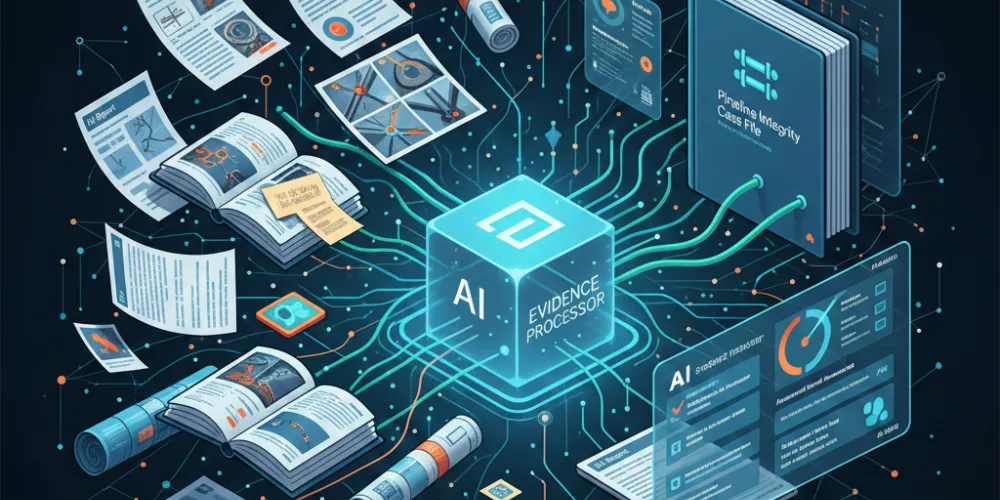
At Logassa Inc, we build Pipeline Integrity Evidence-Pack Agents that transform fragmented integrity artifacts-In-Line Inspection (ILI) results, dig records, photos, work orders and repairs-into one traceable, citation-backed, audit-ready evidence pack per anomaly.
The result: less rework, faster audits and stronger regulatory confidence-without removing human engineering authority.
The Core Problem: Pipeline Integrity Evidence-Pack Agent
Pipeline operators are required to run integrity programs that identify threats, assess pipelines (often using In-Line Inspection (ILI)), validate results, execute repairs and document outcomes. In the U.S., this falls under integrity management requirements overseen by PHMSA.
Too Many Artifacts
A single ILI run can generate:
- Vendor reports (PDFs + tables)
- GIS locations and mileposts
- Dig sheets with measurements and properly acquired photos
- Work orders & repair close notes
Linking Is Manual
Teams must manually connect:
ILI anomaly → dig → verification → repair → close-out
- IDs rarely match across systems
- Photos and notes are unstructured
- Evidence packs take days to assemble
Audits Demand the Full Story
Auditors ask
“show me how you got there.”
That requires:
- data → decision → action → approval
- Clear narrative with attachments
- Repeatability
The Manual Reality (and Why It Doesn’t Scale)
Most integrity teams rely on spreadsheets, shared drives, emails and templates. The process works-but people become the integration layer.
Where time is lost
- Downloading and reformatting ILI data
- Reconciling mismatched IDs and locations
- Copying narratives into templates
- Chasing missing photos or sign-offs
The Result
- Inconsistent evidence packs
- Higher audit risk
- Slower response to regulator questions
- Knowledge locked in individuals
The Solution: A Pipeline Integrity Evidence-Pack Agent
Think of the agent as a pipeline integrity analyst assistant.
It reads, links, validates and assembles evidence-but never replaces engineering judgment.
What the AI Agent Does & Does Not: Pipeline Integrity Evidence-Pack Agent
✅ What the Pipeline Integrity Evidence-Pack Agent Does
- Ingests ILI reports, dig packages, photos, work orders and repairs
- Links records by anomaly ID, location, asset context and time
- Generates a structured evidence pack.
- Gap-checks missing proof (photos, measurements, sign-offs)
- Summarizes decisions with citations to approved procedure
❌ Pipeline Integrity Evidence-Pack Agent Donts
- Approve repairs or override engineers
- Invent measurements or infer missing data
- Cite unapproved documents
- Hide uncertainty or low-confidence matches
Rule: No citation → no claim.
less time spent assembling packs (pilot target; measure baseline vs after)
fewer missing-attachment findings (goal via automated gap-checking)
traceability per anomaly (every claim tied to a record or source)
Real-World Implementation Flow: Pipeline Integrity Evidence-Pack Agent
ILI Run Arrives
Vendor delivers ILI report and anomaly list (PDF/CSV).
Single Source of Truth Created
Agent normalizes IDs, aligns GIS locations and creates one anomaly record per issue.
Digs Are Linked
Dig notes, measurements and photos are matched with confidence scoring.
Repairs & Close-Out Attached
Work orders, repair methods, post-repair checks and approvals are pulled in.
Evidence Pack Generated (Draft)
Includes:
Narrative summary
Anomaly table
“What we did and why”
Attachment checklist
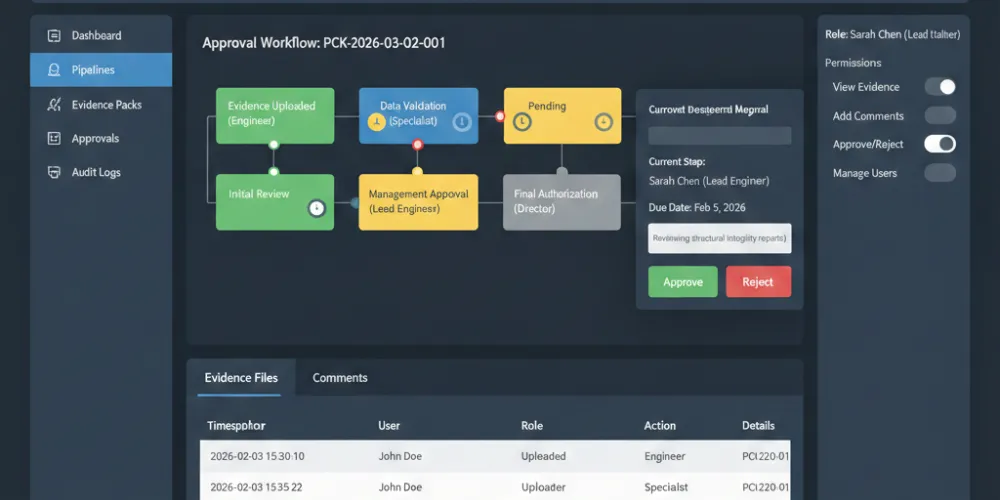
Human Review & Approval (Mandatory)
Engineers validate, edit if needed and approve final packs.
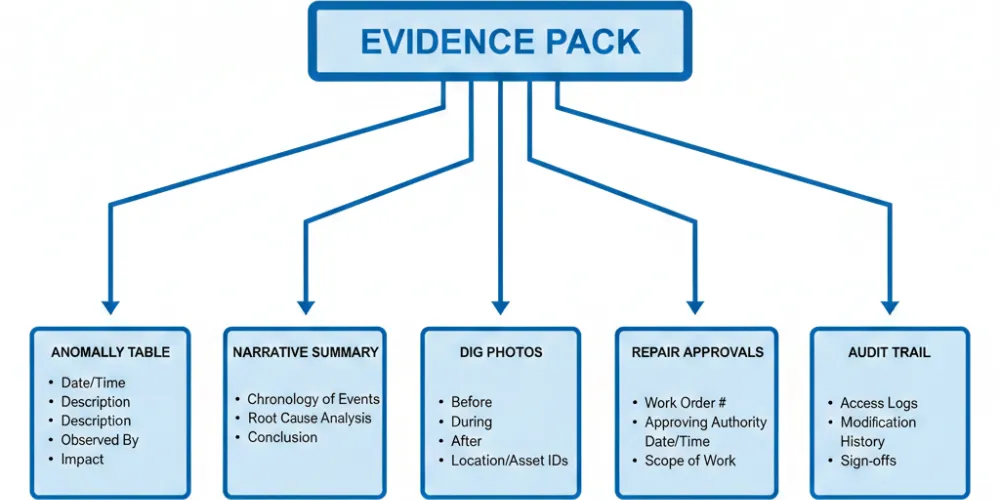
What a Complete Evidence Pack Includes?: Pipeline Integrity Evidence-Pack Agent
- ILI run context and definitions
- Anomaly prioritization rationale
- Dig verification data + photos
- Repair actions and work order references
- Validation, close-out summary and signatures
Common Gaps the Agent Flags Automatically: Pipeline Integrity Evidence-Pack Agent
- Location mismatches (ILI vs dig GPS/milepost)
- Missing photo evidence
- Incomplete measurements
- Missing repair close-out sign-offs
- Unclear deferment rationale
Implementation Blueprint (Agentic AI Pattern): Pipeline Integrity Evidence-Pack Agent
Data Inputs
- ILI reports and anomaly tables
- GIS pipeline routes
- Dig packages (notes, photos, measurements)
- CMMS work orders
- Internal procedures and standards
Agent Steps
- Normalize IDs, locations, timestamps
- Match anomalies to digs with confidence scoring
- Retrieve policies for citations (RAG)
- Validate completeness via rules engine
- Generate draft evidence pack + gap list
- Route to engineer for approval
Reference Technology Stack (Typical)
Data & Systems
- RAG with vector database
- Agent workflow orchestrator
- Document parsing (PDFs, images, metadata)
- Rules engine for completeness validation
AI Layer
- RAG with vector database
- Agent workflow orchestrator
- Document parsing (PDFs, images, metadata)
- Rules engine for completeness validation
Outputs
- Word/PDF evidence packs
- Attachment bundles
- Immutable audit logs and approvals
- Status dashboards
Pilot Metrics That Matter
Operational
- Time to assemble evidence pack
- Rework rate due to missing items
- Time from ILI receipt → review-ready pack
Quality
- Attachment completeness score
- Traceability score
- Mismatch detection rate
- Audit response time
Final Thought: Pipeline Integrity Evidence-Pack Agent
Pipeline Integrity Evidence-Pack Agent programs don’t fail due to lack of effort-they fail when proof is fragmented.
At Logassa Inc, our Pipeline Integrity Evidence-Pack Agents remove the paperwork burden while strengthening traceability, audit readiness and regulatory confidence-without compromising engineering authority.
👉 The best time to start was yesterday. The second-best time is today-with Logassa Inc and our advanced AI solutions.
Know more about our works with our Blogs. Happy Reading!
US Sources: Pipeline Integrity Evidence-Pack Agent
These are reputable US-focused references you can cite in the blog and sales conversations for Pipeline Integrity Evidence-Pack Agent:
PHMSA integrity management resources
- PHMSA: Gas Transmission Integrity Management
- PHMSA: Integrity Management overview
US regulations (definitions & rule)
- Federal Register (2022): Gas Transmission rulemaking
Standards / industry references
- API Recommended Practice 1160 (fact sheet PDF)
Extra (assessment context)