
AI Agents for Workplace Safety:
The Next Evolution
⏱ 12 min read | 🤖 AI & Automation | 🎯 For Decision Makers
Introduction to AI Agents for Workplace Safety
AI agents for workplace safety is undergoing a rapid transformation. Over the years, organizations moved from paper-based permits to digital safety platforms. Now, AI agents for workplace safety are driving the next major shift.
Today, intelligent AI agents can draft permits, validate Job Safety Analyses (JSAs), suggest hazard controls, and cross-check safety steps in real time. However, humans remain firmly in control. AI agents support decision-making instead of replacing it.
As a result, industries such as oil & gas, construction, manufacturing, utilities, and maritime operations are already seeing measurable gains. Moreover, organizations using AI agents for workplace safety report faster approvals, fewer errors, and stronger compliance outcomes.
The Three Eras of Safety Management
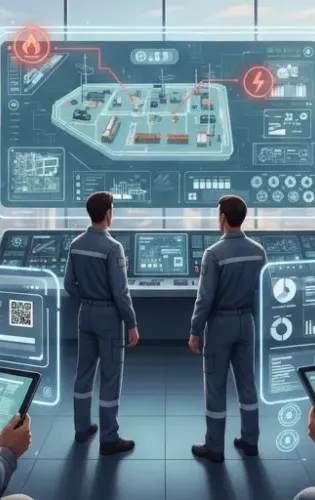
To understand why AI agents for workplace safety matter today, it helps to review how safety systems evolved.
PAST
Paper-Based Safety
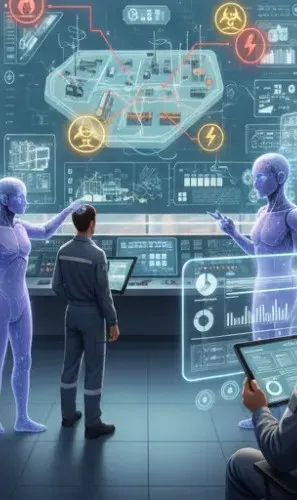
PRESENT
Digital Platforms
FUTURE
AI Agents & Predictive Systems

2000s
2020s
2030s
Era 1: Paper-Based Safety Systems
Initially, workplace safety relied entirely on manual processes. Consequently, organizations struggled with inefficiency and risk.
- Handwritten permits and approvals
- Slow workflows and frequent document loss
- Limited visibility into active risks
As a result, safety teams spent more time managing paperwork than managing hazards.
Era 2: Digital Safety Platforms
Next, digital systems replaced paper forms. While this improved efficiency, intelligence was still limited.
- Electronic permits and cloud storage
- Automated routing and dashboards
- Faster approvals, but manual risk analysis
Although helpful, these platforms still depended heavily on human input.
Era 3: AI Agents for Workplace Safety
Today, AI agents for workplace safety introduce intelligence into every step of safety planning.
- AI drafts PTWs and JSAs
- AI suggests hazard controls
- AI validates completeness and predicts risk
- Humans approve all decisions
As a result, safety workflows become faster, more consistent and easier to audit.
🔑 Key Insight: AI Agents Support-They Don’t Replace Humans
A common misconception is that AI agents for workplace safety automate decisions. In reality, they function as expert assistants.
AI agents can:
- Draft permits using SOPs and historical data
- Suggest controls from approved knowledge bases
- Flag gaps, conflicts and inconsistencies
However, human supervisors always make the final call. Think of AI agents as 24/7 safety advisors that strengthen human judgment.
Why AI Agents for Workplace Safety Are Emerging Now?
This shift is happening because three critical technologies have converged.
- Large Language Models (LLMs):
LLMs understand safety procedures, regulations and incident reports written in natural language. Therefore, they can interpret real-world work descriptions accurately.
- Retrieval-Augmented Generation (RAG):
RAG ensures AI agents use only approved internal documents such as SOPs, JSAs and safety manuals. As a result, outputs remain compliant and trustworthy.
- Platform Integration:
Modern APIs now connect PTW systems with:
- ERP platforms
- Incident databases
- IoT sensors
- Training and certification records
Together, these technologies power reliable AI agents for workplace safety.
What AI Agents for Workplace Safety Do Today?
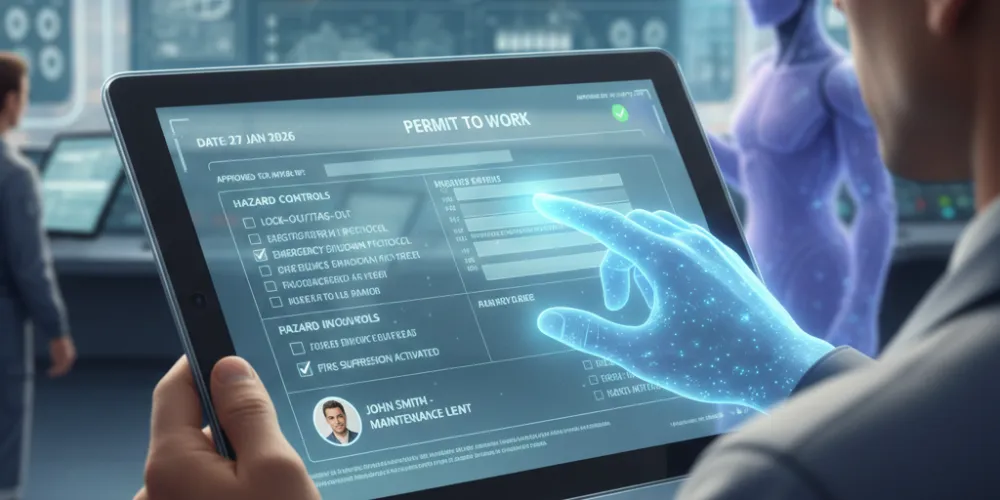
1. Intelligent Permit Drafting
Instead of starting from blank forms, workers describe tasks in plain language.
“Hot work on pipeline valve V-237 in Unit 4, Tuesday 0800-1200.”
The AI agent then:
- Selects the correct permit template
- Pre-fills location, equipment and timing
- Suggests PPE based on task type
- Pulls relevant JSAs
- Identifies required approvers
🌎 Real-World Impact:
One oil & gas operator reduced permit creation time from 45 minutes to 15 minutes. Meanwhile, permit completeness increased from 73% to 96%.
2. Hazard Prediction and Control Suggestions
AI agents analyze historical incidents and near-misses. Consequently, they can:
- Detect recurring risk patterns
- Recommend controls from approved SOPs
- Assign dynamic risk scores
This enables proactive hazard mitigation instead of reactive responses.
3. Cross-System Safety Validation
AI agents for workplace safety can validate data across systems within seconds. They automatically check:
- Worker training certifications
- Equipment lockout and isolation status
- Weather alerts
- Concurrent work conflicts
🎯 Human-AI Partnership:
AI highlights risks, while humans decide how to proceed.
4. Natural Language Safety Queries
Safety teams can ask questions such as:
- “Show all hot work permits from Unit 3 last month.”
- “What are the most common confined space hazards this year?”
- “What PPE is required for working at height?”
The AI responds using approved internal documents with clear source references.
5. Continuous Learning From Incidents
When incidents occur, AI agents for workplace safety:
- Analyze root-cause reports
- Update hazard libraries
- Suggest JSA improvements
- Flag similar upcoming work
Over time, safety quality continuously improves.
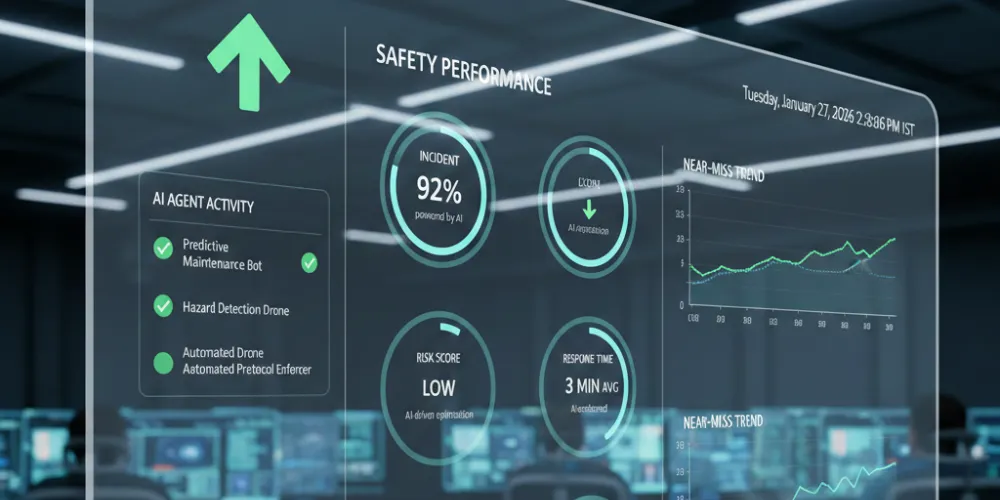
📈 Measurable Outcomes of AI Agents for Workplace Safety:
Organizations using AI agents report:
- 3× faster permit creation
- 85% fewer incomplete permits
- 67% improvement in hazard identification
- 40% reduction in work delays
- Near-zero audit non-compliance
The Business Case for AI Agents for Workplace Safety
Time has changed
30 minutes saved × 50 permits per week = 125 hours recovered per month
Quality Improvement
Every permit consistently follows approved templates and SOPs.
Risk Reduction
Improved hazard identification reduces preventable incidents.
Compliance Confidence
Audit-ready documentation is maintained automatically.
Beyond Cost Savings: Strategic Value
AI agents for workplace safety also deliver long-term advantages:
- Preserve expert knowledge
- Ensure consistency across sites
- Accelerate employee onboarding
- Reveal systemic safety gaps
- Strengthen competitive positioning
🚀 Early Adopter Advantage:
Organizations adopting AI agents in 2025 gain durable advantages as their systems learn faster and improve continuously.
The Future of AI Agents for Workplace Safety (2025-2035)
Near-Term Capabilities
- Voice-activated permit creation
- Computer vision hazard detection
- IoT-driven permit updates
- Multi-language safety workflows
Unified Safety Ecosystems
Future platforms will unify:
- PTW and JSA systems
- Incident management
- Training programs
- Contractor onboarding
- Regulatory reporting
The Human Element Remains Central
Even in the future:
- Humans approve permits
- Workers stop unsafe jobs
- Safety leaders own culture
AI enhances human judgment-it does not replace it.
Final Thoughts: AI Agents for Workplace Safety
The move from paper to digital safety took over a decade. In contrast, the shift to AI agents for workplace safety is happening in just 3-5 years.
This evolution is not about replacing people. Instead, it empowers safety professionals with intelligent tools that make planning faster, safer and easier to audit.
👉 The best time to start was yesterday. The second-best time is today-with Logassa Inc and our advanced AI solutions.
Know more about our works with our Blogs. Happy Reading!