
AI-Driven SEO Research Automation:
Building an Intelligent n8n Flow for Research
⏱ 10–12 min read | 🤖 AI Automation | 📊 SEO Intelligence
Introduction: The Shift from Manual to AI-driven SEO automation
Modern businesses are rapidly moving away from manual keyword research and time-intensive competitor audits and so is the need for AI-driven SEO automation. Traditional SEO workflows-spread across spreadsheets, browser tabs and disconnected tools-are no longer fast or scalable enough to compete in real-time search environments.
As a result, AI-driven SEO automation is becoming the new standard. By combining live SERP intelligence, large language models (LLMs) and workflow orchestration organizations can uncover competitive opportunities faster and with far greater accuracy.
In this article, we break down how Logassa’s AI-driven SEO automation system, built on n8n, delivers real-time competitor intelligence-starting with nothing more than a single domain input.
System Overview: AI-Driven SEO Automation Intelligence Engine
The Automated SEO Competitor Analysis System is a multi-agent, AI-orchestrated workflow designed to eliminate manual SEO groundwork through intelligent automation and live data processing.
Instead of relying on static keyword tools or manual audits, the system operates as an autonomous SEO research engine, dynamically performing the following core functions:
- Generates high-intent, niche-specific keywords aligned with a website’s services and real search demand
- Identifies true organic SEO competitors using live SERP data while filtering out news, directories and informational sources
- Automatically logs validated keywords and competitor insights into a structured Google Sheets database for immediate access by marketing and growth teams
Consequently, SEO research cycles shrink from hours to minutes-without sacrificing accuracy or relevance.
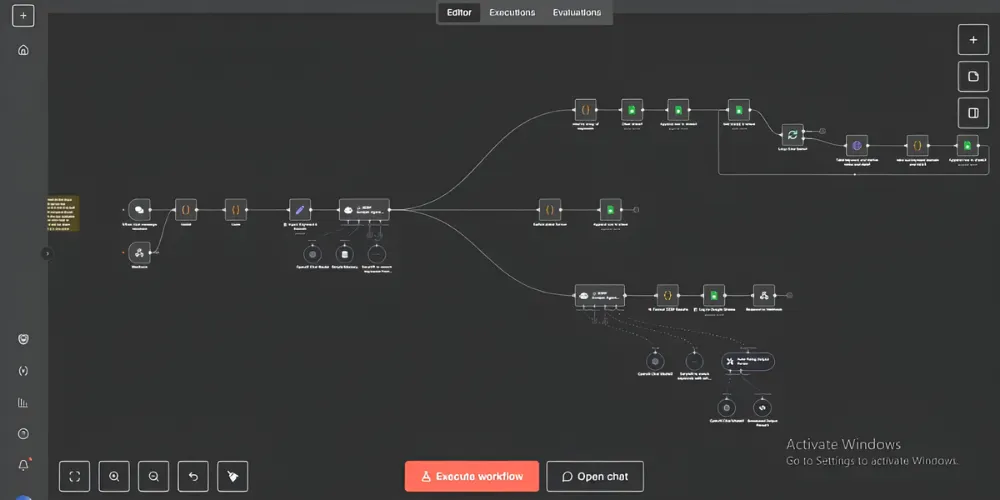
Core Architecture and Workflow Design: AI-driven SEO automation
Workflow Initiation
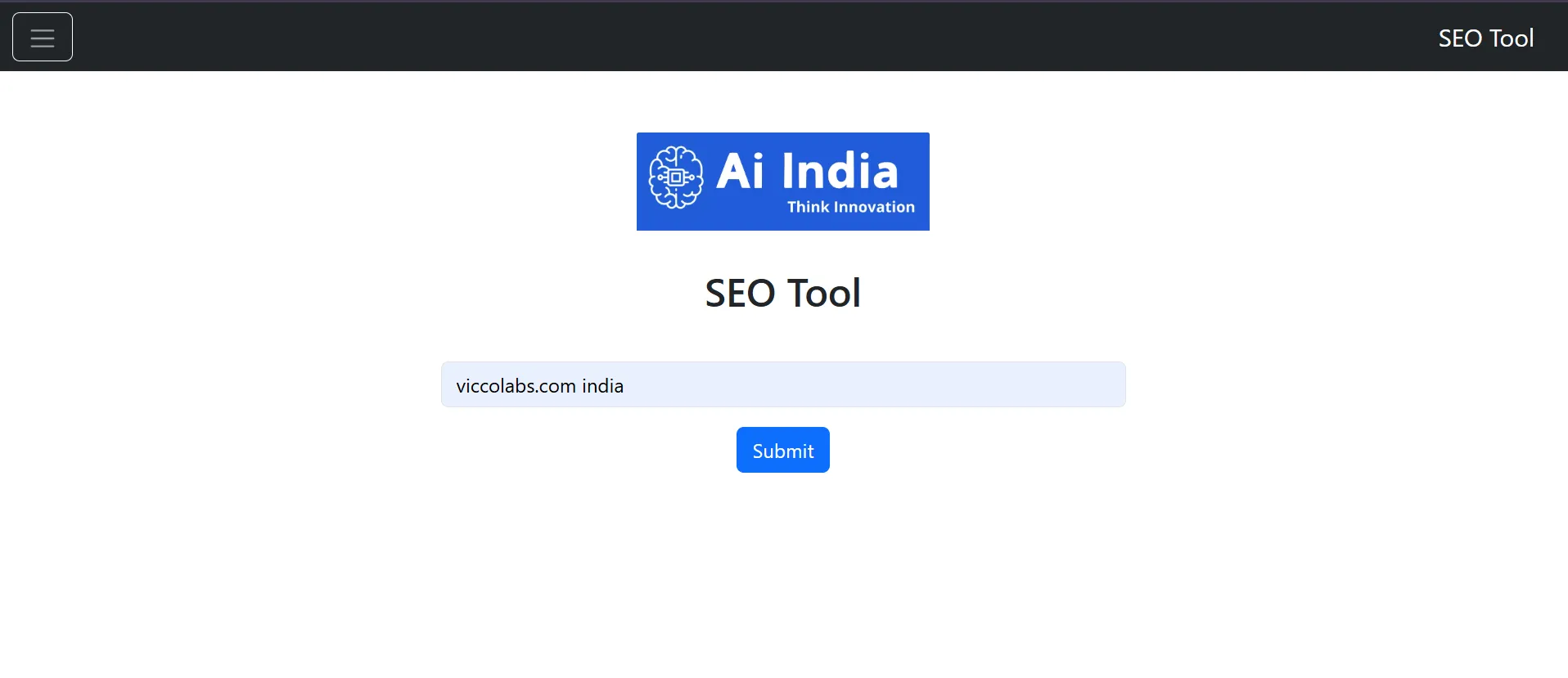
The workflow is triggered through an external webhook, allowing seamless integration with CRMs, lead capture forms, internal dashboards or other automation platforms.
To initiate analysis, users provide only two inputs:
- Target domain
domain(for example, example.com)
- Target country, which is automatically translated into a localized Google search parameter
This ensures that all SERP analysis reflects geographic search intent, not generic global results.
AI Agents and Intelligent Tooling
At the heart of the system is a carefully orchestrated combination of LLMs and live search data, coordinated through n8n workflow nodes.
Key Components
- LLM Agents (GPT-4.1-mini / GPT-4o-mini)
Perform advanced reasoning, contextual analysis and decision-making to determine optimal keyword and competitor discovery strategies
- SerpAPI Integration
Retrieves real-time, location-specific SERP data to validate keywords and identify true organic competitors
- Memory Nodes
Maintain session context, prevent redundant queries and ensure analytical consistency across workflow executions
Together, these components form a scalable, AI-driven SEO automation framework that replaces manual research with continuously validated intelligence.
Keyword Generation and Validation Pipeline for AI-driven SEO automation
Step 1: Domain Context Analysis
The workflow begins with a SERP Scraper Agent (MCP) that performs exploratory searches related to the target domain. This step establishes contextual understanding of:
- Industry focus
- Service offerings
- Market positioning
This contextual grounding is critical for accurate, intent-driven keyword discovery.
Step 2: Intelligent Keyword Discovery
Using LLM reasoning, the system generates high-intent, service-aligned keywords that reflect real search behavior rather than generic suggestions.
For example, a digital marketing agency domain may surface keywords such as:
- SEO automation services
- Google Ads optimization
- Content marketing workflows
Each keyword is generated with commercial relevance in mind-not just volume.
Step 3: Keyword Validation and Optimization
All generated keywords are validated against live SERP data via SerpAPI to confirm relevance and competitiveness.
A dedicated processing node then:
- Removes duplicate or explanatory text
- Normalizes keyword formatting
- Converts output into a clean, numbered structure
- Reattaches the source domain for consistent tracking
The finalized dataset is automatically stored in the “Keywords” tab of a centralized Google Sheets repository, making it instantly usable for SEO planning and campaign execution.
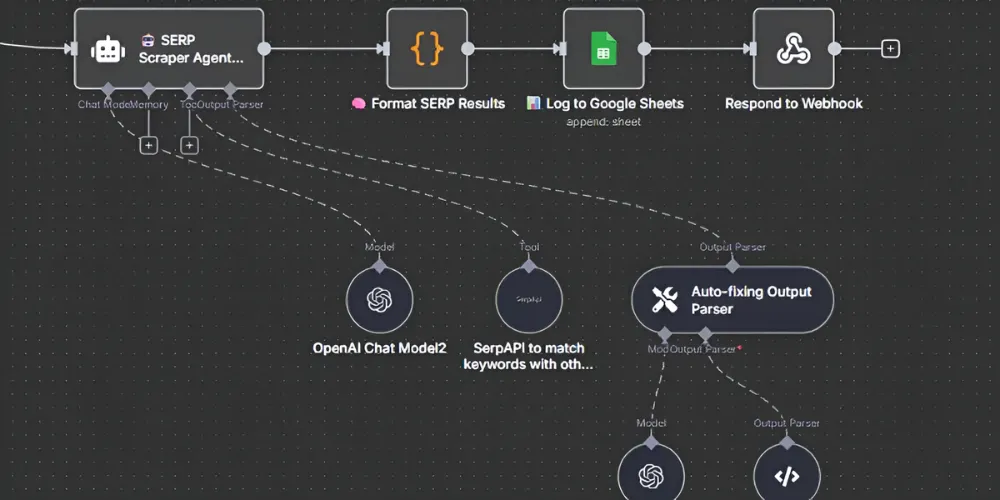
Competitor Identification and Data Logging: AI-driven SEO automation
Step 1: SERP-Based Competitor Discovery
For each validated keyword, the system performs a real-time SERP scan to identify approximately 10 top-ranking organic competitors.
To maintain relevance:
- News websites
- Blogs
- Informational portals
- Non-commercial domains
are automatically filtered out, leaving only actionable business competitors.
Step 2: Structured Data Extraction
Each competitor entry is normalized using structured output parsers and includes:
- Organic ranking position
- Page title
- URL
- Meta description
This ensures consistency, readability and immediate usability across SEO and marketing workflows.
Step 3: Automated Data Logging
All competitor data is automatically written to the “SEO Competitor Websites” tab within the centralized Google Sheets database.
A final webhook response confirms successful execution, providing full visibility and traceability across automated SEO operations.
OUTPUT SCREEN
Why It Matters: Shift To AI-driven SEO automation
Traditional SEO competitor audits often require multiple tools, hours of manual filtering and repeated validation. In contrast, Logassa’s AI-driven SEO automation workflow compresses this entire process into a fully autonomous pipeline.
Key Advantages
- Automation-First SEO – Eliminates repetitive research and manual competitor analysis
- AI-Powered Accuracy – LLM agents understand semantic intent, not just keywords
- Enterprise-Scale Ready – Ideal for agencies and organizations managing multiple domains or markets
- Continuous Optimization – Easily scheduled or chained with other n8n or Zapier workflows
As a result, teams move faster, make better decisions and focus on execution rather than research overhead.
Conclusion: AI-driven SEO automation
AI-powered SEO automation represents a fundamental shift in how organizations approach digital growth. By converting keyword research, SERP validation and competitor mapping into a fully autonomous workflow, businesses replace hours of manual effort with accurate, real-time search intelligence.
Powered by LLM-driven reasoning, n8n workflow orchestration and live SERP data, Logassa’s Automated SEO Competitor Analysis System enables:
- Faster optimization cycles
- Smarter strategic decisions
- Scalable, repeatable SEO operations
This allows teams to focus less on research-and more on performance, execution and measurable growth.
Partner With Logassa
At Logassa LLC, we help businesses unlock the full potential of AI-driven automation for SEO, marketing intelligence and operational efficiency.
From intelligent workflow design and custom LLM integrations to enterprise-grade n8n deployments, we transform manual research processes into scalable, data-driven automation systems.
Whether you’re a marketing agency managing multiple campaigns or an enterprise scaling global search visibility, Logassa delivers AI-powered SEO automation solutions built to accelerate growth and create lasting impact.
👉 The best time to start was yesterday. The second-best time is today-with Logassa Inc and our advanced AI solutions.
Know more about our works with our Blogs. Happy Reading!