
AI in Pharmaceutical Manufacturing:
GenAI, AI Agents & Automation Use Cases
🕑 10 min read | 📂 Cloud | 🎯 For CTOs, Leaders, L&D Heads
AI in Pharmaceutical Manufacturing is moving beyond experiments and into practical manufacturing, quality, documentation, supply chain, and regulatory workflows. Pharmaceutical companies work with huge volumes of batch manufacturing records, SOPs, laboratory reports, Certificates of Analysis, deviation reports, CAPA records, validation documents, equipment manuals, and regulatory filings. These documents contain valuable operational knowledge, but finding, reviewing, and connecting that information can still take significant time.
Why AI Is Important for Pharmaceutical Manufacturing
Pharmaceutical manufacturing depends on strict processes, extensive documentation, quality controls, and traceability. A typical manufacturer may work with dozens of connected document types and data streams, including:
– Batch Manufacturing Records (BMRs)
– SOPs and work instructions
– Quality-control reports and laboratory data
– Certificates of Analysis (CoAs)
– Deviation and CAPA records
– Change controls and validation documents
– Equipment documentation
– Regulatory submissions
– Supplier documentation
– Inventory and production data
AI can help organizations progressively improve these processes through a simple journey:
Searchable → Understandable → Connected → Automated
Instead of attempting to automate everything at once, pharmaceutical companies can start with a focused workflow, validate its value, and gradually expand AI into additional processes.

The path from manual process to production AI is incremental, not a single leap.
19 AI Use Cases in Pharmaceutical Manufacturing
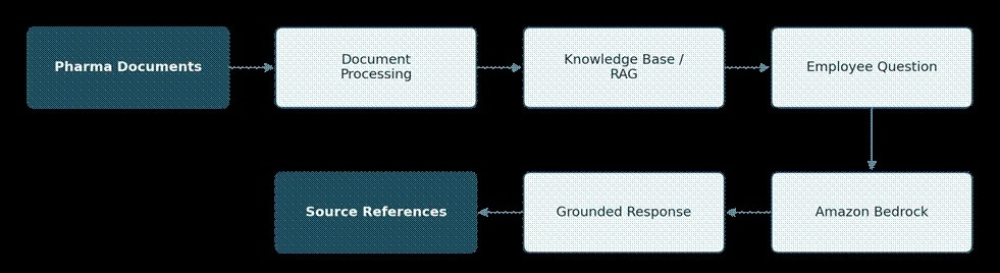
1. AI Pharmaceutical Knowledge Assistant
Pharmaceutical organizations can accumulate thousands of documents across manufacturing, quality, engineering, regulatory, and R&D teams. Finding the right information quickly can become a significant operational challenge.
2. AI SOP Assistant
Standard Operating Procedures are central to pharmaceutical manufacturing, and large organizations may maintain hundreds or thousands of SOPs across sites and product lines. An AI SOP Assistant can help employees quickly locate and understand the relevant approved procedure.
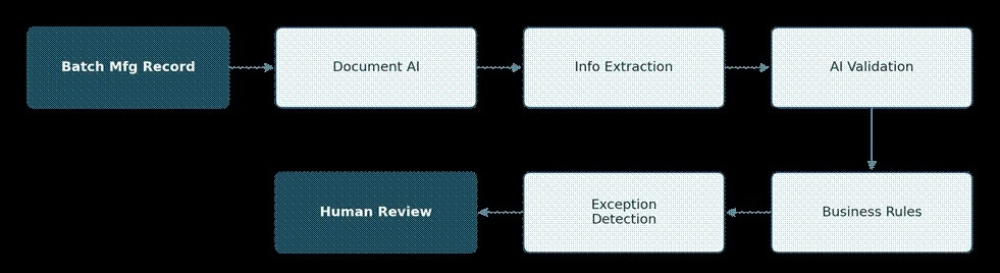
3. AI Batch Manufacturing Record Assistant
Batch Manufacturing Records contain a combination of structured and unstructured information collected throughout production. An AI-powered BMR assistant can use document intelligence and OCR to extract relevant information, compare records against expected requirements, and surface potential exceptions for human review.
4. AI Quality Control Assistant
Quality teams work with large volumes of laboratory and manufacturing data every day. An AI Quality Assistant can help with test-report analysis, Certificate of Analysis processing, specification comparison, quality-document search, trend summarization, exception identification and investigation support.
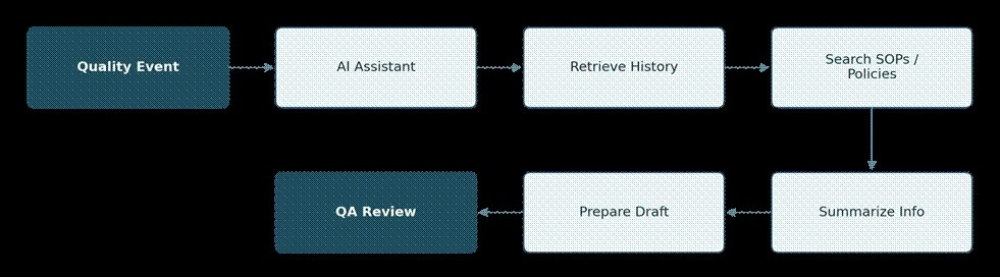
5. AI Quality Assurance Assistant
Quality Assurance teams manage an especially broad documentation footprint. Potential applications include SOP search, deviation-document analysis, CAPA document assistance, change-control analysis, audit preparation, training-record search and quality-document classification.
6. AI Deviation Management
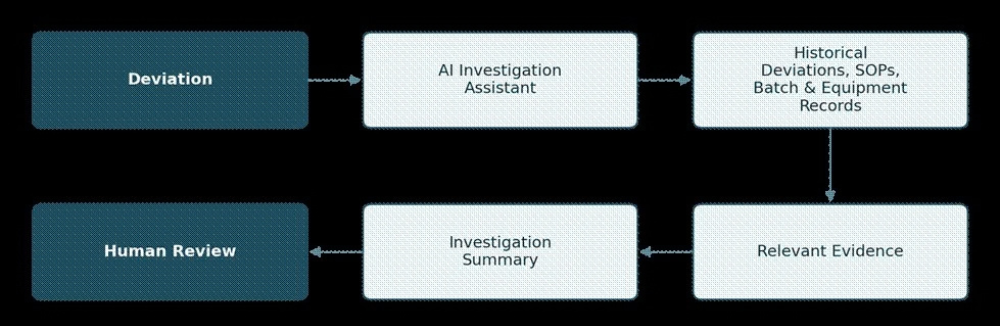
Manufacturing deviations often require pulling together information from multiple, disconnected sources before an investigation can even begin. AI can help teams organize that information quickly by extracting deviation details, searching historical deviations.
7. AI CAPA Assistant
Corrective and Preventive Action (CAPA) processes demand extensive documentation and long-running follow-up. AI can assist with CAPA document analysis, historical CAPA search, similar-event identification, action tracking, evidence organization, CAPA status summaries and management reporting.
8. AI Certificate of Analysis Processing
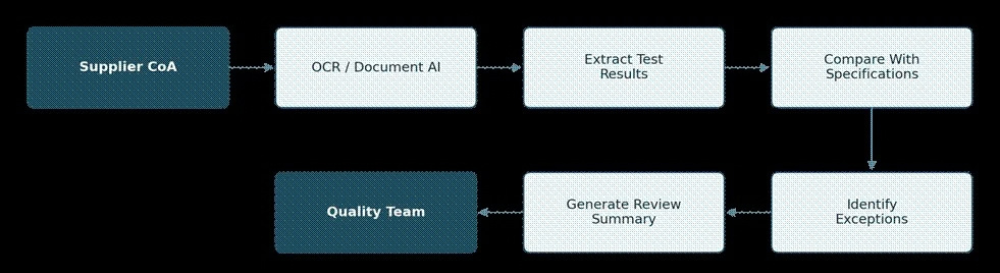
Certificates of Analysis (CoAs) are central to pharmaceutical supply chains and a manufacturer may receive a very large number of supplier CoAs every month. An AI system can read, extract, compare, validate and flag exceptions automatically:
Read → Extract → Compare → Validate → Flag Exceptions
9. AI Supplier Quality Agent
Pharmaceutical manufacturers work with many suppliers, each generating its own stream of documents, certificates, quality records, audit information and delivery data. An AI Supplier Quality Agent can analyze all of this and provide a single, consolidated supplier view.
10. AI Regulatory Affairs Assistant
Pharmaceutical companies deal with large volumes of regulatory information that changes over time. An AI Regulatory Assistant can help teams search regulatory documents, summarize guidelines, compare requirements and find relevant sections.
11. AI Audit Preparation Assistant
Pharmaceutical organizations frequently prepare for internal and external audits, a process that typically means pulling documents from many different systems under time pressure.
12. AI Manufacturing Co-pilot
A pharmaceutical manufacturing copilot provides an intelligent interface over production and operational information, so a production manager can simply ask a question instead of pulling reports from several systems.
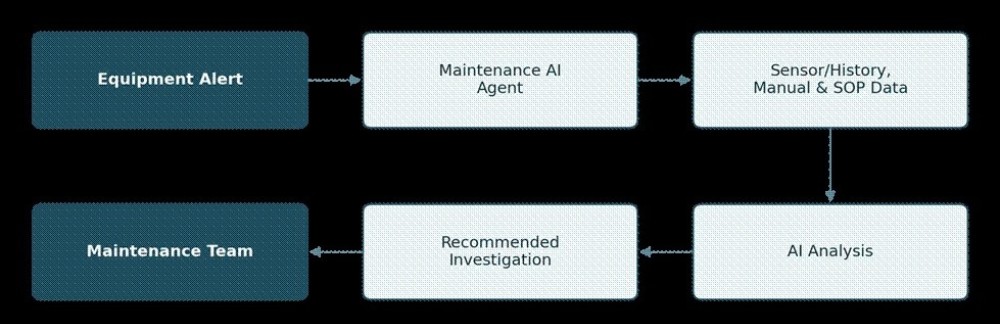
13. AI Predictive Maintenance Assistant
Pharmaceutical manufacturing depends heavily on specialized equipment - mixing equipment, granulators, tablet presses, coating machines, filling machines, packaging equipment, HVAC.
14. AI Visual Inspection for Pharmaceutical Manufacturing
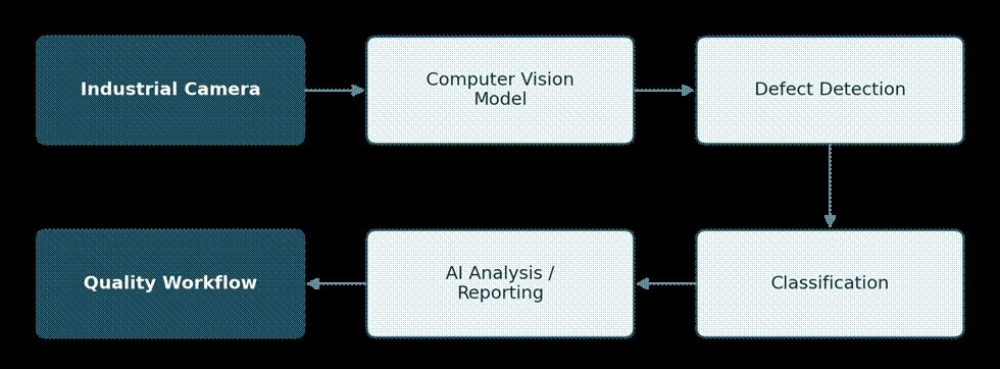
Generative AI is only one part of pharmaceutical AI. Computer vision is equally important for manufacturing inspection workflows, with applications spanning tablet inspection, capsule inspection, packaging inspection and label verification.
15. AI Packaging Inspection
Pharmaceutical packaging requires a very high level of accuracy, since a labeling or seal error can have real patient-safety consequences.

16. AI Inventory & Supply Chain Agent
Pharmaceutical manufacturers manage complex inventories spanning raw materials, APIs, excipients, packaging materials and finished products, alongside supplier lead times, purchase orders and inventory levels. An AI Supply Chain Agent can analyze all of this to support:
17. AI Procurement Agent for Pharma
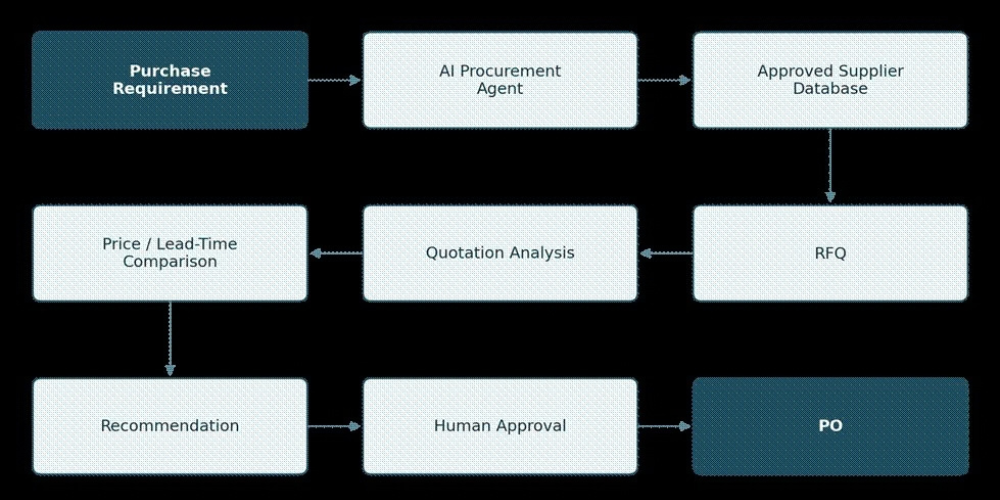
Procurement is a major operational function in pharmaceutical manufacturing, involving supplier discovery, RFQs, quote comparison, vendor documentation, price analysis.
18. AI Medical & Pharmaceutical Research Assistant
Pharmaceutical R&D teams need to analyze large amounts of scientific and competitive information. An AI Research Assistant can help with scientific literature search, research-paper summarization, patent research, compound information retrieval etc.
19. AI Multi-Agent Pharma Platform
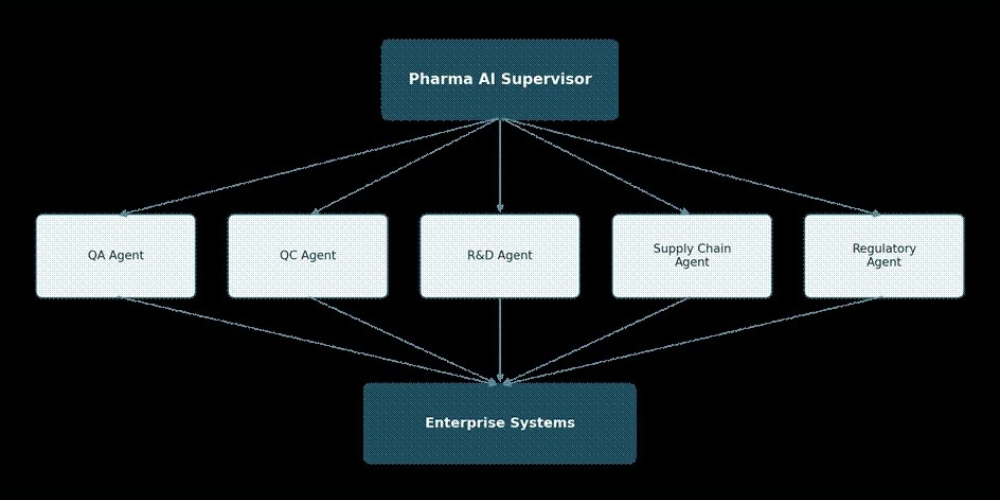
For large pharmaceutical organizations, different business functions can be supported by specialized AI agents working under a coordinating supervisor layer, including QA, QC, Manufacturing, Maintenance, Procurement, Regulatory, Supply Chain, R&D Research and Document agents.
Why Choose Logassa LLC for Pharmaceutical AI Solutions?
Pharmaceutical AI requires more than an LLM. It requires an understanding of manufacturing, quality, documents, AI, automation, and the enterprise systems that support pharmaceutical operations.
Manufacturing + Quality + Documents + AI + Automation + Enterprise Systems
Logassa LLC brings together capabilities across Generative AI, AI agents, RAG, document intelligence, computer vision, workflow automation, enterprise integration, and AI application development.
Our approach follows an incremental path:
Manual Process → AI-Assisted Process → Intelligent Automation → Production AI
The Future of Pharmaceutical Manufacturing Is Intelligent
The pharmaceutical factory of the future will not rely on traditional automation alone.
Industrial Automation + Computer Vision + IoT + Generative AI + AI Agents + Enterprise Data + Automation
A production manager may interact with a manufacturing co-pilot. A quality professional may use an AI investigation assistant. A technician may use an AI maintenance agent.
Conclusion
The most practical approach is to start with one well-defined use case, measure its value, establish the right governance, and then expand. With expertise across Generative AI, AI agents, RAG, OCR, computer vision, document intelligence, automation, and enterprise integration, Logassa LLC helps pharmaceutical organizations move from manual processes toward intelligent, connected, and scalable AI-powered operations - while keeping human oversight at the center of critical decisions.