
N8N

AI agents monitoring workplace safety and technical risks in real time

AI Agents for Workplace Safety and Technical Risk Management

AI Agents for Workplace Safety: The Next Evolution The Three Eras of Safety Management Era 1: Paper-Based[Manual Everything] Physical forms, handwritten approvals, filed cabinets, slow processes, lost documents, no visibility Era 2: Digital Platforms[Digitized Workflows] Electronic forms, cloud storage, automated routing, real-time dashboards, instant approvals Era 3: AI Agents[Intelligent Assistance] AI drafts permits, suggests controls, validates completeness, learns from incidents, predicts risks 💡Key Insight: AI Agents Don’t Replace Humans The goal isn’t automation for automation’s sake. AI agents are assistants, not decision-makers. They draft permits based on historical data and SOPs, suggest hazard controls from knowledge bases, and flag potential conflicts—but humans retain final approval authority on every safety decision. Think of it as having an incredibly knowledgeable safety advisor available 24/7, not a system taking over. Why Now? The Convergence of Three Technologies Large Language Models (LLMs): AI that can understand safety procedures, regulations, and incident reports in natural language Retrieval-Augmented Generation (RAG): Systems that ground AI responses in your actual SOPs, JSAs, and approved documentation Platform Integration: APIs connecting PTW systems with ERP, incident databases, IoT sensors, and training records What AI Agents Actually Do Today? Real capabilities delivering measurable value 1. Intelligent Permit Drafting Instead of starting from blank forms, workers describe the task in plain language: “Hot work on pipeline valve V-237 in Unit 4, scheduled for Tuesday 0800-1200.” The AI agent: – Retrieves the correct permit template (hot work, confined space, etc.). – Pre-fills location, equipment, and timing details. – Suggests required PPE based on the task type. – Pulls relevant JSA from the database. – Lists nearby concurrent work for conflict checking. – Identifies required approvers based on organizational hierarchy. Real-World Example: A major oil & gas operator implemented AI-assisted permit drafting and reduced average permit creation time from 45 minutes to 15 minutes—a 3x improvement. More importantly, the completeness score (percentage of permits with all required fields properly filled) increased from 73% to 96%. 2. Hazard Prediction & Control Suggestion AI agents analyse historical incident data, near-misses, and approved JSAs to suggest hazard controls: – Pattern Recognition “Similar hot work on this equipment class resulted in 3 near-misses last year due to inadequate ventilation” – Control Recommendations “Based on approved SOPs, recommended controls include: forced ventilation, gas monitoring every 15 min, fire watch” – Risk Scoring “This task scores 8/10 on risk matrix. Consider additional controls or supervisor presence during execution” 3. Cross-System Validation AI agents can check consistency across multiple data sources in seconds: – Training verification: “Worker John Smith’s confined space certification expired last month” – Equipment status: “Isolation valve V-237 is currently showing active maintenance lock in CMMS” – Weather integration: “High wind warning issued for work area during planned timeframe” – Concurrent work conflicts: “Electrical work scheduled in adjacent area may create spark hazard” 🎯 The Human-AI Partnership AI agents surface information and suggest actions, but they never execute without human approval. Every permit still requires authorized signatures. Every JSA still needs supervisor review. The AI simply makes the process faster, more consistent, and more thorough than humans working alone. 4. Natural Language Queries Safety professionals can ask questions in plain English: – “Show me all hot work permits issued in Unit 3 last month” – “What were the most common hazards identified in confined space JSAs this year?” – “Find similar incidents to the nitrogen leak we had on Tuesday” – “What PPE is required for working at height on cooling towers?” The AI retrieves answers from approved documentation, complete with source citations. 5. Continuous Learning from Incidents When incidents occur, AI agents can: – Analyze root cause reports and extract patterns – Update hazard libraries with newly identified risks – Suggest JSA revisions based on lessons learned – Flag similar upcoming work that might benefit from enhanced controls 📈 Measurable Outcomes Organizations using AI agents for PTW/JSA report: – 3x faster permit creation – 85% reduction in incomplete permits – 67% improvement in hazard identification completeness – 40% reduction in permit-related work delays – Near-zero compliance violations during audits The Business Case for AI Agents – Operational Efficiency Time savings: 30-45 minutes saved per permit × 50 permits/week = 125 hours/month recovered for productive work – Quality Improvement Consistency: Every permit uses approved templates, includes complete hazard analysis, follows SOPs—every time – Risk Reduction Fewer incidents: Better hazard identification and control validation = preventable accidents avoided – Compliance Confidence Audit-ready: Complete documentation, source citations, approval trails automatically maintained ROI Calculation Example Baseline: 200 permits/month, 45 min average creation time, $75/hour loaded labor cost With AI agents: 15 min average creation time (3x improvement) Monthly savings: 200 permits × 30 minutes saved × $75/hour ÷ 60 = $7,500/month Annual value: $90,000 in direct time savings alone (not counting quality improvements, incident prevention, or compliance benefits) Beyond Cost Savings: Strategic Value – Knowledge preservation: Capture expertise from retiring safety professionals in AI knowledge bases – Consistency across sites: Same safety standards applied globally, regardless of local experience levels – Faster onboarding: New employees get AI guidance while learning organizational safety processes – Data-driven improvement: Aggregate insights across thousands of permits reveal systemic issues – Competitive advantage: Faster, safer project execution = better bids and client confidence 🚀 Early Adopter Advantage Organizations implementing AI agents in 2025 are establishing competitive moats. They’re building proprietary knowledge bases, training AI on their specific hazards and controls, and creating workflows competitors can’t easily replicate. The learning curve means first movers compound their advantage over time. The Future: 2025-2030 What’s coming next in AI-powered safety Emerging Capabilities (Next 12-24 Months) Voice-Activated Assistants “Create hot work permit for Reactor 3 valve maintenance tomorrow at 9 AM” – spoken at the worksite, permit drafted instantly Computer Vision Integration AI reviews photos of work area to identify hazards: “Scaffold base appears unstable in image 3, recommend structural review” IoT Sensor Fusion Real-time environmental data (gas levels, temperature, wind) automatically trigger permit requirement updates Multi-Language Support Global operations with AI translating safety procedures while maintaining technical accuracy

AI Agents for Workplace Safety and Technical Risk Management Read More »

AI agents monitoring workplace safety and technical risks in real time

AI-Driven SEO Automation Platform with N8N for Competitor Analysis

AI-Driven SEO Automation: Building an Intelligent N8N Workflow for Competitor Analysis Introduction Modern businesses are moving away from manual keyword research and time-intensive competitor audits in favor of intelligent, AI-powered SEO automation. With real-time SERP analysis and automated competitor insights, SEO teams can make faster strategic decisions and uncover higher-ranking opportunities with greater accuracy. In this article, we break down how our AI-driven SEO automation workflow built on N8N delivers real-time search intelligence-starting with nothing more than a single domain input. System Overview: AI-Driven SEO Intelligence The Automated SEO Competitor Analysis System is a multi-agent, AI-orchestrated workflow designed to eliminate manual SEO groundwork through intelligent automation and live data processing. The system dynamically performs the following core functions: – Generates high-intent, niche-specific keywords aligned with a website’s services and search demand – Identifies true SEO competitors using live search engine results while filtering out news and informational sources – Automatically logs keyword and competitor insights into a structured Google Sheets database for immediate access by marketing & growth Acting as an autonomous SEO research engine, the workflow continuously analyses, validates and stores search intelligence with minimal human intervention-enabling faster optimization cycles and more data-driven SEO strategies. Core Architecture and Workflow Design Workflow Initiation The workflow is activated through an external webhook trigger, enabling seamless integration with CRMs, lead capture forms and automation platforms. This flexible trigger mechanism allows teams to launch automated SEO analysis directly from their existing systems. To begin the process, users simply provide two inputs: – Domain (for example, example.com) Target country, which is automatically converted into a localized Google search parameter to ensure accurate SERP results AI Agents and Intelligent Tooling The system architecture leverages a combination of GPT-4.1-mini, GPT-4o-miniand SerpAPI, orchestrated through intelligent workflow nodes to deliver accurate, real-time SEO insights. Each component serves a specialized function: – LLM Agents – Perform advanced reasoning, contextual interpretation and decision-making to define the optimal SEO analysis approach – SerpAPI Integration – Retrieves live, location-specific SERP data to validate keywords and identify true organic competitors – Memory Nodes – Maintain session context, prevent redundant queriesand ensure analytical consistency across workflow executions Together, these components form a scalable, AI-driven SEO automation framework that replaces manual research with continuous, data-backed intelligence. Keyword Generation and Validation Step 1: Domain Context Analysis A SERP Scraper Agent (MCP) initiates an exploratory search to understand the target domain’s purpose, industry focus and market positioning. This step provides the contextual foundation required for accurate keyword discovery. Step 2: Intelligent Keyword Discovery Using large language model (LLM) intelligence, the system generates high-intent, service-driven keywords aligned with the domain’s core offerings and search behaviour. For example, a digital marketing agency may surface keywords such as SEO automation services, Google Ads optimization, or content marketing workflows, based on real-world search relevance. Step 3: Keyword Validation and Optimization Each generated keyword is validated against live SERP data through SerpAPI, ensuring relevance, competitiveness and search accuracy. A dedicated code node then processes the validated output by: – Removing unnecessary explanations and duplicate entries – Normalizing and cleaning keyword formatting – Converting keywords into a structured, numbered list – Reattaching the source domain for consistent tracking and reporting The finalized keyword dataset is automatically stored in the “Keywords” tab of a centralized Google Sheets repository, making it immediately available for SEO planning and campaign execution. Competitor Identification and Data Logging Step 1: SERP-Based Competitor Discovery For each validated keyword, the system executes a real-time SERP scan to identify approximately ten top-ranking business competitors per keyword. To ensure relevance, informational, news-based and non-commercial domains are automatically filtered out-retaining only actionable, business-focused results. Step 2: Structured Data Extraction The workflow uses structured output parsers to normalize competitor data into clean, standardized entries. Each record includes: – Organic ranking position – Page title – URL – Meta description This ensures consistency, readability and immediate usability across SEO and marketing workflows. Step 3: Automated Data Logging All validated competitor entries are automatically stored in the “SEO Competitor Websites” tab within a centralized Google Sheets database. A final webhook response confirms successful workflow execution, enabling full traceability and transparent automation monitoring. Once deployed, access the interface at http://localhost:5678 and complete the initial setup. Why It Matters: From Manual SEO Audits to Autonomous Intelligence Traditional SEO competitor audits often take hours and require multiple tools, manual filtering and repeated validation. Logassa’s AI-driven SEO automation workflow compresses this entire process into a fully autonomous pipeline-delivering accurate, actionable insights in minutes. Key Advantages – Automation-First SEO – Eliminates repetitive research tasks and manual competitor analysis – AI-Powered Accuracy – LLM agents provide semantic understanding of search intent and relevance – Enterprise-Scale Ready – Ideal for agencies and organizations managing multiple domains or markets – Continuous Optimization – Seamlessly integrates with N8N or Zapier for scheduled runs and chained automation workflows Conclusion The rise of AI-powered SEO automation represents a fundamental shift in how organizations approach digital growth. By converting keyword research, SERP validation and competitor mapping into a fully autonomous workflow, businesses can replace hours of manual effort with accurate, real-time SEO intelligence. Powered by LLM-driven reasoning, N8N workflow orchestration and live search engine data, the Automated SEO Competitor Analysis System enables faster optimization cycles, smarter strategic decisions and scalable SEO operations. This approach allows teams to focus less on research overhead and more on execution, performance and measurable growth. Partner With Logassa At Logassa, we help businesses unlock the full potential of AI-driven automation for SEO, marketing intelligence and operational efficiency. From intelligent workflow design to custom LLM integrations and enterprise-grade N8N deployments, we transform manual research processes into scalable, data-driven automation systems. Whether you’re a marketing agency optimizing multiple campaigns or an enterprise scaling your digital presence, Logassa delivers AI-powered SEO automation solutions designed to accelerate growth and drive long-term impact.

AI-Driven SEO Automation Platform with N8N for Competitor Analysis Read More »

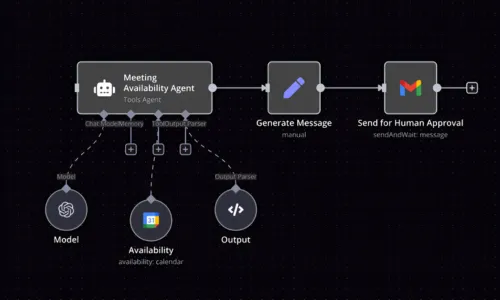
AI workflow automation architecture integrating intelligent agents, data processing, and human-in-the-loop enterprise systems

N8N: An Open-Source Automation Platform for Modern Businesses

N8N: An Open-Source Automation Platform Powering Modern Businesses Introduction In an increasingly fast-moving digital landscape, organizations are under constant pressure to operate more efficiently with fewer resources. Manual workflows drain valuable time, repetitive tasks slow teams down and scaling operations often means increasing headcount. Automation has become the foundation for solving these challenges-and among the growing ecosystem of automation platforms, n8n has quickly established itself as a preferred choice for modern businesses. Unlike many automation tools constrained by high licensing costs or closed ecosystems, n8n delivers open-source flexibility, cost efficiency and unlimited workflow creation, making it a powerful solution for start-ups, small and mid-sized businesses and large enterprises alike. What Is N8N? n8n (pronounced n-eight-n) is an open-source workflow automation platform designed to connect applications, APIs and services without the need for complex coding. Through an intuitive visual, drag-and-drop interface, teams can build automated workflows that trigger actions such as sending emails, updating CRM records, synchronizing data, or monitoring social signals-based on predefined events. At its core, n8n functions as a 24/7 digital automation engine, running background processes reliably so teams can focus on strategic, high-impact work instead of repetitive operational tasks. How N8N Compares to Zapier & Make? Feature N8N(Self-Hosted) Zapier Make Pricing Model Free (self-hosted) / Optional cloud plans Paid subscription tiers Paid subscription tiers Customization & Flexibility Fully customizable workflows Limited customization Moderate customization Open Source Yes No No Automation Limits Unlimited (self-hosted) Restricted by plan Restricted by plan Data Ownership & Control Full control (self-hosted) Data stored on Zapier servers Data stored on Make servers Common Automation Use Cases with N8N N8N enables businesses to automate a wide range of operational and marketing workflows, including: – Lead Management Automation – Capture leads from websites, landing pages, or ads and sync them instantly with your CRM – Social Media Monitoring – Track brand mentions across platforms and receive real-time alerts – SEO Performance Tracking – Monitor keyword rankings automatically and update analytics dashboards – E-commerce Workflow Automation – Trigger alerts for new orders, inventory changes, or abandoned carts. These use cases help teams respond faster, reduce manual effort and maintain operational consistency. How N8N Delivers Business Value? By automating repetitive and time-intensive processes, n8n helps organizations operate more efficiently and intelligently. Key business benefits include: – Time Savings – Eliminate manual tasks such as data entry and report updates – Improved Customer Experience – Enable instant responses and faster service delivery through automation – Better Data Management – Centralize, structure and synchronize data for marketing, analytics and decision-making Why Businesses Choose N8N? Organizations across industries adopt n8n for its flexibility, cost efficiency and scalability. Core reasons include: – Unlimited Automations – No per-task or execution limits when self-hosted – Cost Efficiency – Reduce reliance on expensive SaaS automation subscriptions – High Flexibility – Integrates with 400+ services and supports custom APIs – Enterprise Scalability – Suitable for start-ups, growing teams and large-scale enterprise operations Getting Started with N8N: From Setup to First Workflow Step 1: Choose Your Deployment Model. – Cloud Deployment – Sign up directly via the n8n cloud platform – Self-Hosted Deployment (Recommended for Data Control) – Deploy using Docker, npm, or source code for full privacy and ownership Example Docker command: docker run -d –name n8n -p 5678:5678 -v ~/.n8n:/home/node/.n8n n8nio/n8n Once deployed, access the interface at http://localhost:5678 and complete the initial setup. Step 2: Create Your First Workflow – Navigate to the dashboard – Select Create Workflow Add nodes for triggers, actions and data transformation Step 3: Build an AI-Powered Chat Automation (Example) A simple AI-driven workflow may include: – Trigger Node – Activates when a chat message is received – AI Agent Node – Acts as the core logic processor – Google Gemini Chat Model – Generates natural language responses – Memory Node – Maintains conversation context – Calculator Tool – Handles numerical queries – SerpAPI Tool – Retrieves real-time web and search data Step 4: Configure Integrations – Google Gemini API – Set API keys, configure temperature and token limits – SerpAPI – Define query parameters, API credentials and output formats Step 5: Test and Deploy – Execute the workflow to validate logic and performance – Monitor executions using logs and run history – Refine and deploy for production use Community, Resources and Best Practices One of N8N’s greatest strengths is its active ecosystem and growing knowledge base, which makes adoption and scaling easier for teams at every stage. Community Support – Engage with the global n8n community via Discord, GitHub and official forums – Share workflows, troubleshoot issues and learn from real-world automation use cases Learning Resources – Step-by-step tutorials from the n8n blog – Video walkthroughs and workflow demos on YouTube – Comprehensive official documentation available at docs.n8n.io   Best Practices for Scalable Automation – Use expressions to handle dynamic data efficiently – Monitor execution logs regularly to optimize performance – Scale workflows using worker queues for high-volume automation – Start with pre-built templates to accelerate learning and deployment Conclusion N8N is more than a workflow automation tool-it is a strategic enabler for modern business growth. By combining open-source flexibility, enterprise-grade scalability and cost efficiency, n8n empowers organizations to automate smarter, innovate faster and improve operational outcomes. Whether you are automating a single process or rearchitecting your entire operations, n8n is built to scale alongside your business-without limiting flexibility or control. Partner With Logassa At Logassa.us, we help businesses unlock the full potential of n8n workflow automation through intelligent design, custom integrations and secure self-hosted deployments. From planning automation strategies to implementing AI-powered workflows, we transform manual processes into scalable, data-driven systems. Whether you’re a startup reducing operational overhead, an enterprise optimizing complex workflows, or a SaaS company scaling rapidly, Logassa delivers automation solutions designed to drive efficiency, agility and long-term growth.

N8N: An Open-Source Automation Platform for Modern Businesses Read More »