N8N

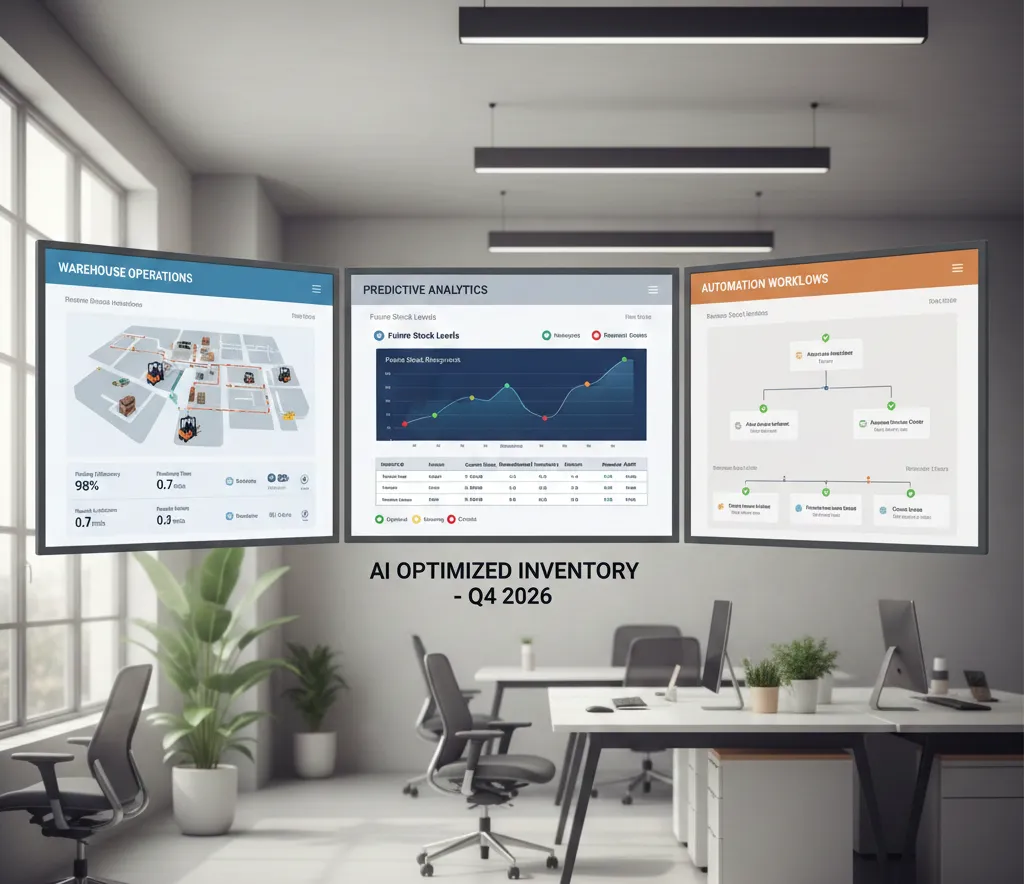
AI-driven inventory management system dashboard

AI-Driven Inventory Management System

AI-Driven Inventory Management System Using n8n Automation ⏱ 10 min read | 🤖 AI & Automation | 🎯 For Decision Makers & Leaders Inventory Is No Longer a Storage Problem: AI-Driven Inventory Management System For modern enterprises, the AI-Driven Inventory Management System has evolved far beyond tracking stock levels. Today, it is about anticipating demand, optimizing capital and making intelligent decisions before disruptions occur.   However, many organizations still: – React too late to demand shifts, chasing outdated trends – Rely on manual forecasting methods that lack predictive accuracy – Use ERP systems that report historical data instead of future insights As a result, inventory becomes a liability instead of a strategic asset. The Critical Gap in Traditional Inventory & ERP Systems: AI-Driven Inventory Management System Even advanced ERP platforms are fundamentally descriptive, not predictive. They provide visibility into current inventory but fail to answer what truly matters: what’s coming next.   This limitation leads to: – Excess capital tied up in overstock, restricting cash flow – Emergency procurement cycles, eroding margins – Lost revenue opportunities due to stockouts and delays To compete at scale, businesses need inventory systems that think ahead. Our Solution: An AI-Driven Inventory Management System At Logassa Inc, we designed an AI-Driven Inventory Management System that converts inventory data into real-time predictive intelligence. By orchestrating workflows through n8n automation and applying OpenAI-powered forecasting models, the system continuously analyzes trends, predicts demand and automates inventory decisions-while keeping ERP systems synchronized in real time. Why We Use n8n: Intelligent Orchestration at Enterprise Scale n8n is the backbone of our automation layer because it enables: – Seamless integration with ERPs, databases, APIs and data warehouses – Custom logic design without hard vendor dependencies – Enterprise-grade scalability without operational bottlenecks This architecture ensures flexibility, transparency and long-term scalability. 1. Continuous Data Ingestion Inventory levels, historical sales data and demand signals are collected automatically across systems. 2. AI-Powered Demand Forecasting OpenAI analyzes sales velocity, seasonality and trend patterns to generate forward-looking demand insights. 3. Decision Intelligence Layer n8n logic evaluates reorder points, overstock risks and optimal procurement quantities. 4. Automated Execution The system updates ERP records, generates purchase orders and sends alerts-all in real time. This ensures decisions are made before issues arise, not after they impact operations. Measurable Business Impact: AI-Driven Inventory Management System Organizations deploying this AI-driven inventory management system achieve: – Reduced stockouts and backorders – Optimized inventory holding costs – Faster, data-driven decisions – Improved cash flow visibility – Elimination of manual errors – Predictive planning capability – Audit-ready decision logs – Scalability without increasing headcount Industries We Support: AI-Driven Inventory Management System This solution is designed for complex, regulated and high-volume environments, including: Retail & E-commerce Manufacturing & Healthcare Logistics & Supply Chain FMCG Wholesale & Distribution Pharmaceuticals & Medical Supply The system adapts to SKU complexity, lead times, compliance rules and demand volatility. Deployment options include cloud or self-hosted, with no vendor lock-in. Live Demo: AI-Generated Purchase Order in Production – AI-Driven Inventory Management System The image below represents an AI-Driven Inventory Management System output, not a mock-up. The AI-driven workflow: – Identified a future stockout – Forecasted upcoming demand – Calculated reorder quantities – Automatically generated a purchase order – Sent notification emails without human intervention This is production-ready decision automation. Final Takeaway: AI-Driven Inventory Management System Inventory excellence today requires predictive intelligence, not reactive reporting. With an AI-Driven Inventory Management System, enterprises transform inventory from an operational burden into a competitive advantage. At Logassa Inc, we help organizations achieve this through AI-powered automation built for scale, compliance and long-term growth. 👉 The best time to start was yesterday. The second-best time is today-with Logassa Inc and our advanced AI solutions. Know more about our works with our Blogs. Happy Reading!

AI-Driven Inventory Management System Read More »
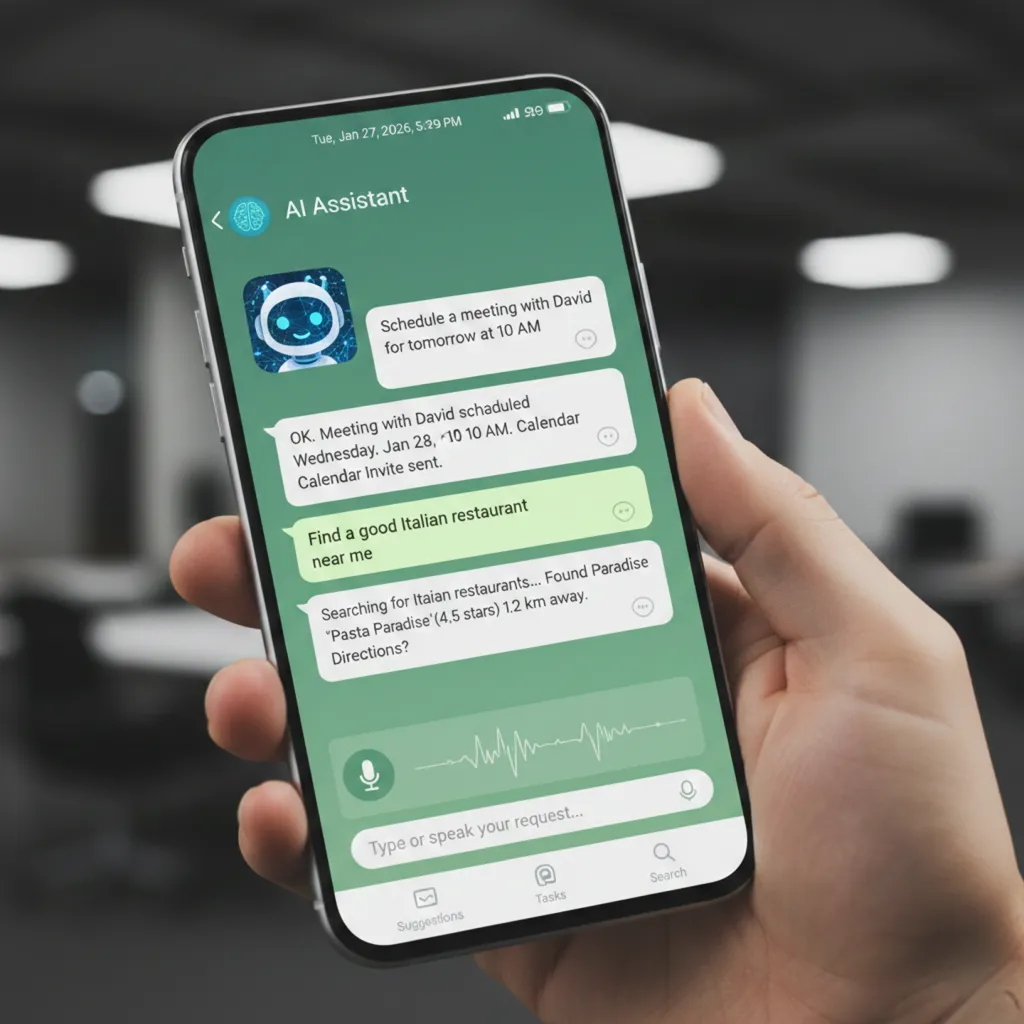
AI WhatsApp assistant workflow using n8n and OpenAI

AI WhatsApp Assistant Using n8n

Building an AI WhatsApp Assistant: Using n8n, UltraMsg and OpenAI ⏱ 10 min read | 🤖 AI Automation | 🎯 For Builders & Decision Makers Introduction to an AI WhatsApp Assistant WhatsApp automation becomes significantly more powerful when it moves beyond static auto-replies. Today, an AI WhatsApp Assistant can understand user intent, remember conversation context and interact with real systems such as calendars, databases and CRMs. As businesses scale customer engagement, WhatsApp is emerging as a preferred interface. Therefore, combining orchestration tools with AI reasoning is now essential. In this guide, we build a production-ready AI WhatsApp Assistant using n8n, integrated with intelligent messaging, memory and scheduling capabilities. Specifically, this workflow connects: – UltraMsg for WhatsApp messaging – OpenAI for natural language understanding – Conversational memory for context – Google Calendar for availability checks As a result, this design supports appointment booking, AI customer support and SaaS-style WhatsApp automation platforms. What Does This AI WhatsApp Assistant Workflow Do? At a high level, this AI WhatsApp Assistant performs the following steps: – Receives incoming WhatsApp messages via UltraMsg – Normalizes and prepares the message payload – Passes the message to an AI Agent – Allows the AI to reason, remember and invoke tools – Formats the final response – Sends the reply back to WhatsApp Importantly, this is not a chatbot flowchart. Instead, it is an event-driven AI workflow designed for real-world automation. High-Level Architecture of the AI WhatsApp Assistant The architecture of this AI WhatsApp Assistant follows a clean, modular design: WhatsApp User ↓ UltraMsg Webhook ↓ n8n Webhook Trigger ↓ Message Normalization (JavaScript) ↓ AI Agent • OpenAI Chat Model • Simple Memory • Calendar Tool ↓ Response Formatter (JavaScript) ↓ UltraMsg Send Message API ↓ WhatsApp User This structure ensures clarity, scalability and production readiness. Step 0: UltraMsg Configuration UltraMsg acts as the WhatsApp provider for this AI WhatsApp Assistant. It enables message delivery and webhook triggering. Configuration steps: – Sign up using an email address – Create a new UltraMsg instance – Link the WhatsApp number to your device – Save the following details for later use:           – API URL           – Instance ID           – Authentication token After the trial period, pricing plans are available to continue services. Step 1: UltraMsg Webhook – WhatsApp Entry Point The UltraMsg webhook serves as the entry point for every message sent to the AI WhatsApp Assistant. This node receives inbound WhatsApp events, including: – Sender phone number – Message content – Message metadata For production use, the webhook URL from this node must be configured inside UltraMsg. Step 2: JavaScript Node – Message Normalization Incoming webhook payloads are often deeply nested and provider-specific. Therefore, normalization is essential. This JavaScript node extracts: – Sender phone number – Message text – Only relevant metadata As a result, prompts remain clean, debugging becomes easier and future scaling is simplified for the AI WhatsApp Assistant. Step 3: AI Agent – Central Reasoning Layer The AI Agent is the brain of the AI WhatsApp Assistant. Unlike basic LLM calls, this agent can: – Understand user intent – Maintain conversational memory – Dynamically invoke tools Consequently, the assistant behaves intelligently instead of following rigid rules. Step 4: OpenAI Chat Model The OpenAI Chat Model provides natural language understanding and response generation. Within the AI WhatsApp Assistant, the model: – Interprets user messages – Reasons about intent – Generates contextual responses Importantly, the model is not hard-coded to specific actions. Instead, it supports flexible, dynamic decision-making. Step 5: Simple Memory – Conversational Context WhatsApp itself is stateless. However, conversational continuity is critical. The Simple Memory node enables the AI WhatsApp Assistant to: – Handle follow-up questions – Support multi-step booking flows – Deliver context-aware responses As a result, conversations feel natural and human-like. Step 6: Calendar Tool – Availability Checks This step demonstrates AI tool calling in action. When the AI WhatsApp Assistant detects scheduling intent, it invokes the Calendar tool. The tool: – Fetches available time slots – Returns structured availability data – Feeds results back to the AI Agent This allows real-time appointment handling without manual intervention. Step 7: JavaScript Node – Response Formatting Before sending a reply, the AI output must match UltraMsg’s API structure. This JavaScript node: – Extracts the final AI response – Builds the WhatsApp message payload – Handles errors and fallback logic Thus, message delivery remains reliable and consistent. Step 8: HTTP Request – Sending the WhatsApp Message Finally, the HTTP Request node sends the response back to WhatsApp using UltraMsg’s API. It includes: – Authentication token – Recipient phone number – Message body At this point, the AI WhatsApp Assistant completes the interaction cycle. End-to-End Testing Once all nodes are connected: – Send a test WhatsApp message – Observe execution inside n8n – Verify AI reasoning and memory – Confirm successful reply delivery Execution history in n8n helps validate workflow reliability. Why Is This AI WhatsApp Assistant Production-Ready? This AI WhatsApp Assistant is designed for real deployments because it offers: – Clear separation of concerns – Provider-agnostic architecture – AI-driven logic instead of static flows – Easy extensibility with CRMs and databases As a result, teams can scale without re-architecting. Final Thoughts This workflow proves that WhatsApp can become an intelligent interface rather than a simple messaging channel. By combining n8n orchestration with AI reasoning, memory and real tools, the AI WhatsApp Assistant evolves from basic automation into a powerful conversational system. This foundation easily extends into booking platforms, AI customer support and multi-tenant SaaS solutions.   👉 The best time to start was yesterday. The second-best time is today-with Logassa Inc and our advanced AI solutions. Know more about our works with our Blogs. Happy Reading!

AI WhatsApp Assistant Using n8n Read More »

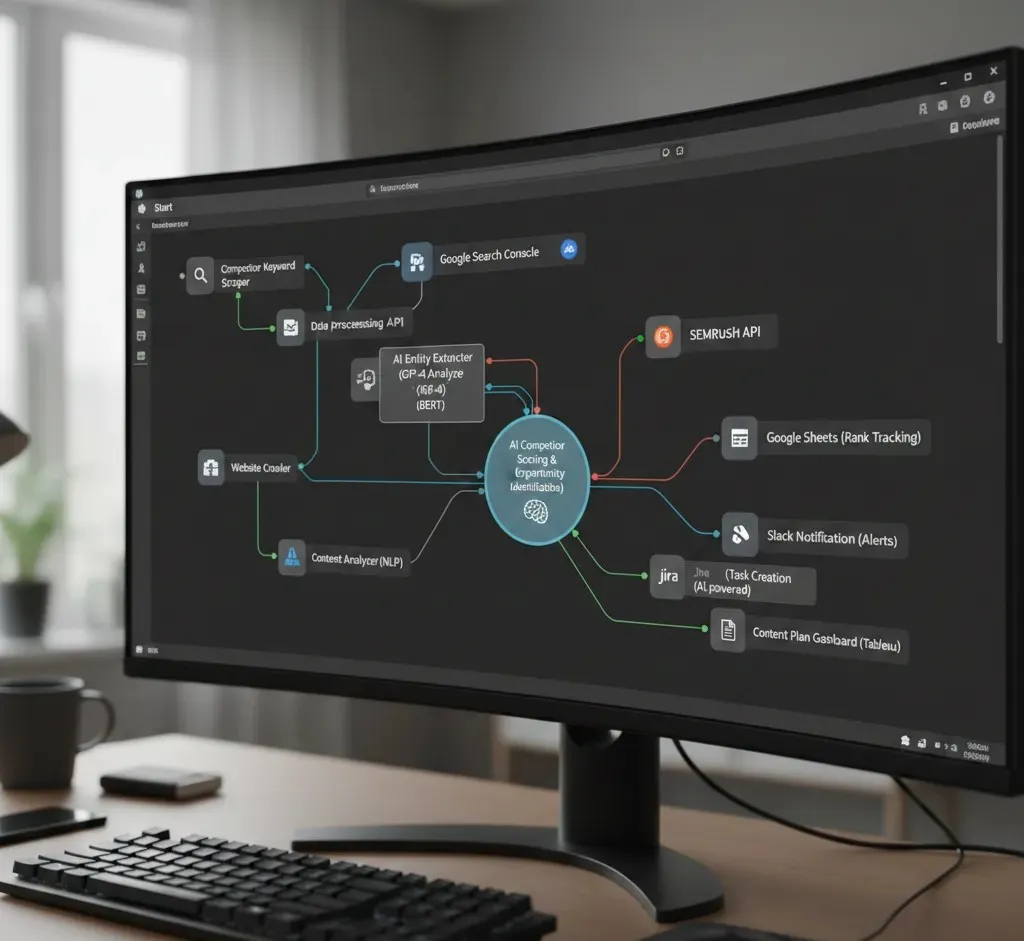
AI-driven SEO automation workflow using n8n for competitor analysis

AI-Driven SEO Automation for Research

AI-Driven SEO Research Automation: Building an Intelligent n8n Flow for Research ⏱ 10–12 min read | 🤖 AI Automation | 📊 SEO Intelligence Introduction: The Shift from Manual to AI-driven SEO automation Modern businesses are rapidly moving away from manual keyword research and time-intensive competitor audits and so is the need for AI-driven SEO automation. Traditional SEO workflows-spread across spreadsheets, browser tabs and disconnected tools-are no longer fast or scalable enough to compete in real-time search environments. As a result, AI-driven SEO automation is becoming the new standard. By combining live SERP intelligence, large language models (LLMs) and workflow orchestration organizations can uncover competitive opportunities faster and with far greater accuracy. In this article, we break down how Logassa’s AI-driven SEO automation system, built on n8n, delivers real-time competitor intelligence-starting with nothing more than a single domain input. System Overview: AI-Driven SEO Automation Intelligence Engine The Automated SEO Competitor Analysis System is a multi-agent, AI-orchestrated workflow designed to eliminate manual SEO groundwork through intelligent automation and live data processing. Instead of relying on static keyword tools or manual audits, the system operates as an autonomous SEO research engine, dynamically performing the following core functions: – Generates high-intent, niche-specific keywords aligned with a website’s services and real search demand – Identifies true organic SEO competitors using live SERP data while filtering out news, directories and informational sources – Automatically logs validated keywords and competitor insights into a structured Google Sheets database for immediate access by marketing and growth teams Consequently, SEO research cycles shrink from hours to minutes-without sacrificing accuracy or relevance. Core Architecture and Workflow Design: AI-driven SEO automation Workflow Initiation The workflow is triggered through an external webhook, allowing seamless integration with CRMs, lead capture forms, internal dashboards or other automation platforms. To initiate analysis, users provide only two inputs: – Target domain domain(for example, example.com) – Target country, which is automatically translated into a localized Google search parameter This ensures that all SERP analysis reflects geographic search intent, not generic global results. AI Agents and Intelligent Tooling At the heart of the system is a carefully orchestrated combination of LLMs and live search data, coordinated through n8n workflow nodes. Key Components – LLM Agents (GPT-4.1-mini / GPT-4o-mini) Perform advanced reasoning, contextual analysis and decision-making to determine optimal keyword and competitor discovery strategies – SerpAPI Integration Retrieves real-time, location-specific SERP data to validate keywords and identify true organic competitors – Memory Nodes Maintain session context, prevent redundant queries and ensure analytical consistency across workflow executions Together, these components form a scalable, AI-driven SEO automation framework that replaces manual research with continuously validated intelligence. Keyword Generation and Validation Pipeline for AI-driven SEO automation Step 1: Domain Context Analysis The workflow begins with a SERP Scraper Agent (MCP) that performs exploratory searches related to the target domain. This step establishes contextual understanding of: – Industry focus – Service offerings – Market positioning This contextual grounding is critical for accurate, intent-driven keyword discovery. Step 2: Intelligent Keyword Discovery Using LLM reasoning, the system generates high-intent, service-aligned keywords that reflect real search behavior rather than generic suggestions. For example, a digital marketing agency domain may surface keywords such as: – SEO automation services – Google Ads optimization – Content marketing workflows Each keyword is generated with commercial relevance in mind-not just volume. Step 3: Keyword Validation and Optimization All generated keywords are validated against live SERP data via SerpAPI to confirm relevance and competitiveness. A dedicated processing node then: – Removes duplicate or explanatory text – Normalizes keyword formatting – Converts output into a clean, numbered structure – Reattaches the source domain for consistent tracking The finalized dataset is automatically stored in the “Keywords” tab of a centralized Google Sheets repository, making it instantly usable for SEO planning and campaign execution. Competitor Identification and Data Logging: AI-driven SEO automation Step 1: SERP-Based Competitor Discovery For each validated keyword, the system performs a real-time SERP scan to identify approximately 10 top-ranking organic competitors. To maintain relevance: – News websites – Blogs – Informational portals – Non-commercial domains are automatically filtered out, leaving only actionable business competitors. Step 2: Structured Data Extraction Each competitor entry is normalized using structured output parsers and includes: – Organic ranking position – Page title – URL – Meta description This ensures consistency, readability and immediate usability across SEO and marketing workflows. Step 3: Automated Data Logging All competitor data is automatically written to the “SEO Competitor Websites” tab within the centralized Google Sheets database. A final webhook response confirms successful execution, providing full visibility and traceability across automated SEO operations. OUTPUT SCREEN Why It Matters: Shift To AI-driven SEO automation Traditional SEO competitor audits often require multiple tools, hours of manual filtering and repeated validation. In contrast, Logassa’s AI-driven SEO automation workflow compresses this entire process into a fully autonomous pipeline. Key Advantages – Automation-First SEO – Eliminates repetitive research and manual competitor analysis – AI-Powered Accuracy – LLM agents understand semantic intent, not just keywords – Enterprise-Scale Ready – Ideal for agencies and organizations managing multiple domains or markets – Continuous Optimization – Easily scheduled or chained with other n8n or Zapier workflows As a result, teams move faster, make better decisions and focus on execution rather than research overhead. Conclusion: AI-driven SEO automation AI-powered SEO automation represents a fundamental shift in how organizations approach digital growth. By converting keyword research, SERP validation and competitor mapping into a fully autonomous workflow, businesses replace hours of manual effort with accurate, real-time search intelligence. Powered by LLM-driven reasoning, n8n workflow orchestration and live SERP data, Logassa’s Automated SEO Competitor Analysis System enables: – Faster optimization cycles – Smarter strategic decisions – Scalable, repeatable SEO operations This allows teams to focus less on research-and more on performance, execution and measurable growth. Partner With Logassa At Logassa LLC, we help businesses unlock the full potential of AI-driven automation for SEO, marketing intelligence and operational efficiency. From intelligent workflow design and custom LLM integrations to enterprise-grade n8n deployments, we transform manual research

AI-Driven SEO Automation for Research Read More »

n8n automation platform powering modern business workflows

n8n Automation Platform for Business

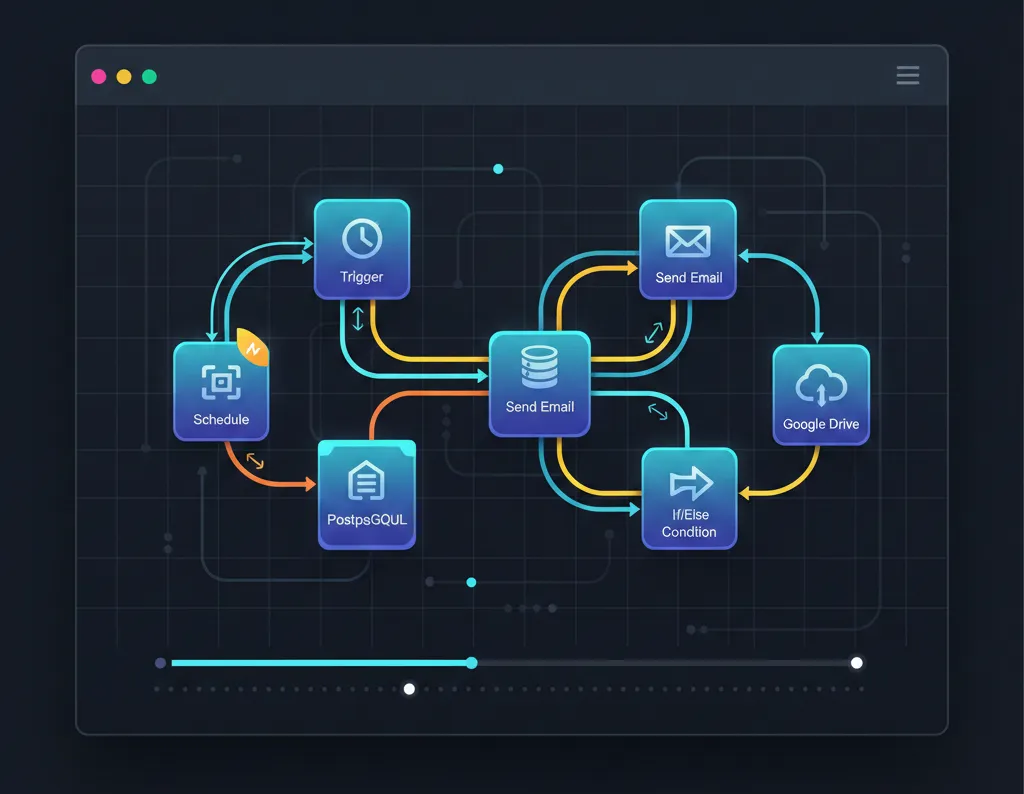
n8n Automation Platform: Powering Modern Business Automation ⏱ 11 min read | ⚙️ Workflow Automation | 🎯 For Business & Tech Leaders Introduction to the n8n Automation Platform n8n Automation Platform is a need as in today’s fast-moving digital economy, organizations face constant pressure to deliver more with fewer resources. As a result, manual workflows drain productivity, repetitive tasks slow teams down and scaling operations often means increasing headcount. This is where automation becomes essential. Among the growing ecosystem of workflow automation tools, the n8n automation platform has quickly emerged as a preferred solution for modern businesses. Unlike many proprietary tools with high licensing costs and rigid limits, n8n delivers open-source flexibility, cost efficiency and unlimited workflow creation. Therefore, startups, mid-sized companies and large enterprises alike are adopting the n8n automation platform to streamline operations, reduce costs and scale intelligently. What Is the n8n Automation Platform? The n8n automation platform (pronounced n-eight-n) is an open-source workflow automation tool designed to connect applications, APIs and services without complex coding.   Through an intuitive visual, drag-and-drop interface, teams can build workflows that: – Send emails automatically – Update CRM records – Sync data between systems – Monitor events and trigger actions   At its core, the n8n automation platform acts as a 24/7 digital engine. Consequently, background processes run reliably while teams focus on strategic, high-impact work instead of repetitive operational tasks. n8n Automation Platform vs Zapier and Make When comparing automation tools, flexibility and control matter. The n8n automation platform stands apart in several critical areas. Feature n8n (Self-Hosted) Zapier Make Pricing Model Free (self-hosted) / Optional cloud Paid tiers Paid tiers Customization Fully customizable Limited Moderate Open Source Yes No No Automation Limits Unlimited (self-hosted) Plan-based Plan-based Data Control Full ownership Zapier servers Make servers As a result, organizations that value data ownership and flexibility often choose the n8n automation platform. Common Automation Use Cases with the n8n Automation Platform The n8n automation platform supports a wide range of operational and marketing workflows, including: – Lead Management Automation-Capture leads from websites or ads and sync them instantly with your CRM – Social Media Monitoring-Track brand mentions and receive real-time alerts – SEO Performance Tracking-Monitor keyword rankings and update dashboards automatically – E-commerce Automation-Trigger alerts for new orders, inventory changes, or abandoned carts Consequently, teams respond faster, reduce manual effort and maintain operational consistency. How the n8n Automation Platform Delivers Business Value By automating repetitive processes, the n8n automation platform enables organizations to operate more efficiently and intelligently.   Key Business Benefits: – Time Savings-Eliminate manual data entry and repetitive reporting – Improved Customer Experience-Enable faster responses through automated workflows – Better Data Management-Centralize and synchronize data for analytics and decision-making Therefore, automation becomes a growth enabler rather than just a cost-saving tool. Why Businesses Choose the n8n Automation Platform Organizations across industries adopt the n8n automation platform for several compelling reasons: – Unlimited Automations-No per-task or execution limits when self-hosted – Cost Efficiency-Reduce reliance on expensive SaaS automation subscriptions – High Flexibility-Integrates with 400+ services and custom APIs – Enterprise Scalability-Supports startups, growing teams and large enterprises As a result, n8n scales alongside the business without limiting control or innovation. Getting Started with the n8n Automation Platform Step 1: Choose Your Deployment Model The n8n automation platform supports multiple deployment options: – Cloud Deployment-Sign up directly on the n8n cloud – Self-Hosted Deployment (Recommended)-Deploy using Docker, npm, or source code for full data ownership   Example Docker command: docker run -d –name n8n -p 5678:5678 -v ~/.n8n:/home/node/.n8n n8nio/n8n Once deployed, access the interface and complete the initial setup. Step 2: Create Your First Workflow After setup: – Navigate to the dashboard – Click Create Workflow – Add trigger, action and transformation nodes Thus, automation begins with simple building blocks. Step 3: Build an AI-Powered Automation (Example) A basic AI-driven workflow on the n8n automation platform may include: – Trigger Node: Activates on incoming messages – AI Agent Node: Acts as the reasoning layer – Google Gemini Chat Model: Generates responses – Memory Node: Maintains context – Calculator Tool: Handles numeric queries – SerpAPI Tool: Fetches real-time search data As a result, workflows move beyond rules into intelligent automation. Step 4: Configure Integrations Next, configure required APIs: – Google Gemini: Set API keys, temperature and token limits – SerpAPI: Define queries and output formats This ensures reliable and scalable automation. Step 5: Test and Deploy Before production: – Execute workflows to validate logic – Monitor logs and execution history – Refine and deploy Therefore, reliability and performance remain consistent. Community, Resources and Best Practices Community Support The n8n automation platform benefits from a strong global community: – Discord, GitHub and official forums – Shared workflows and real-world use cases Learning Resources – Step-by-step tutorials on the n8n blog – Video walkthroughs on YouTube – Official documentation at docs.n8n.io Best Practices for Scalable Automation – Use expressions for dynamic data handling – Monitor execution logs regularly – Scale using worker queues – Start with pre-built templates Conclusion The n8n automation platform is more than a workflow tool—it is a strategic enabler for modern business growth. By combining open-source flexibility, enterprise-grade scalability and cost efficiency, n8n empowers organizations to automate smarter, innovate faster and improve outcomes. Whether automating a single process or redesigning entire operations, the n8n automation platform scales without sacrificing control. Partner With Logassa At Logassa Inc, we help businesses unlock the full potential of the n8n automation platform through intelligent workflow design, custom integrations and secure self-hosted deployments. Whether you are a startup reducing operational overhead, an enterprise optimizing complex workflows, or a SaaS company scaling rapidly, Logassa delivers automation solutions built for efficiency, agility and long-term growth.   👉 The best time to start was yesterday. The second-best time is today-with Logassa Inc and our advanced AI solutions. Know more about our works with our Blogs. Happy Reading!

n8n Automation Platform for Business Read More »