Industrial

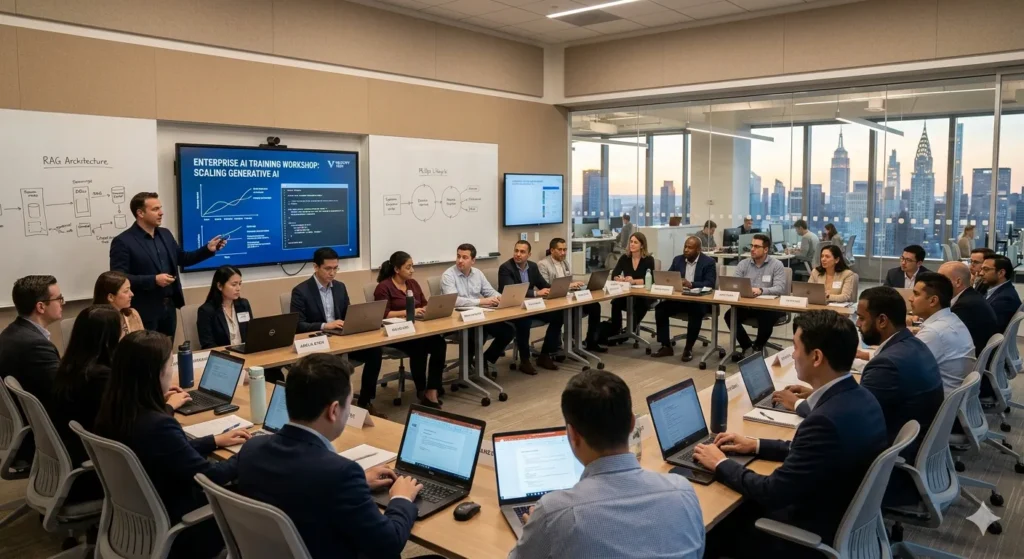
AI Training for Companies workshop for US enterprise teams

AI Training for Companies USA

AI Training for Companies USA: Driving Enterprise Growth πŸ•‘ 6 min read | πŸ“‚ Enterprise AI | 🎯 For CTOs, HR Leaders, L&D Heads AI Training for Companies is no longer optional for US enterprises aiming to stay competitive. Artificial Intelligence has moved from experimentation to execution. However, most organizations still struggle with one critical gap – workforce readiness. At Logassa LLC, Austin, Texas, we help enterprises transform AI investments into measurable ROI through structured, compliance-ready AI training programs built for scale. The Enterprise Problem: AI Tools Exist, ROI Does Not Across the United States, companies are investing heavily in AI platforms for automation, analytics, marketing & engagement. Yet many fail to unlock full value. Common enterprise challenges include: – Employees unsure which AI tools to use – Misconception that AI is too technical – Fear of job displacement – Lack of structured governance – No measurable ROI framework Without proper AI Training for Companies, AI adoption becomes fragmented and underutilized. Practical AI Implementation Across Departments AI Training for Companies Across Enterprise Teams AI adoption must extend beyond IT. Logassa trains: – Marketing & HR Teams (AI-Driven Campaigns & Analytics) – Finance & Sales Teams (Predictive Insights, AI-Powered CRM & Automation) – Operations Leaders (Process Automation & Efficiency) – Executive Management (AI Strategy & Governance) Every session focuses on practical execution within real job functions. Eliminating the Fear: AI Enhances Human Performance One question dominates enterprise conversations: β€œWill AI replace jobs?” Through structured AI Training for Companies, teams quickly understand a critical truth: AI enhances performance. It does not replace expertise. Employees learn to: – Automate repetitive workflows – Improve data-driven decisions – Reduce manual processing time – Focus on strategic initiatives By the end of training, hesitation transforms into an innovative mindset. Measurable ROI from AI Training for Companies Organizations that implement structured AI Training for Companies experience measurable gains: βœ” Faster task execution & Reduced operational costs βœ” Improved research accuracy & Higher content quality βœ” Stronger cross-team collaboration βœ” Increased automation adoption Many enterprises report saving multiple hours per employee per week. At scale, this translates into significant operational ROI. Built for Enterprise Compliance & Scalability In the US market, compliance is non-negotiable. Logassa ensures that AI Training for Companies program aligns: HIPAA (Healthcare AI usage) SOC 2 (Security & governance controls) Data privacy best practices Responsible AI frameworks Logassa’s AI Training for Companies programs are designed for: Multi-location enterprises Hybrid and remote teams Enterprise-grade security environments Localite training for best availability AI adoption without compliance creates risk. AI training with governance creates competitive advantage. Why Do US Enterprises Choose Logassa? Companies partner with Logassa because we focus on: – Performance-driven AI integration with enterprise-grade security standards – Scalable workforce transformation – Automation-first thinking & ROI frameworks We do not just train teams on tools. We help enterprises build AI-ready cultures. The Future of Enterprise Growth Is AI-Enabled Artificial Intelligence is redefining business operations across the United States. However, competitive advantage does not come from owning AI platforms. It comes from empowering teams to use them effectively. AI Training for Companies bridges the gap between technology investment and business transformation. Ready to Scale with AI? πŸ“ˆ If your organization is preparing for enterprise AI adoption, compliance alignment and measurable ROI, Logassa can help. Empower your workforce. Strengthen governance. Accelerate automation.

AI Training for Companies USA Read More Β»

Production RAG architecture

Production RAG Architecture: Moving Beyond Prototypes

Moving Beyond the Prototype: The Production RAG Architecture ⏱ 8–9 min read | πŸ₯ AI Innovation | 🎯 For Leaders, Decision Makers & Professionals Executive Summary: Production RAG architecture Production RAG architecture is the most Retrieval-Augmented Generation (RAG) demonstrations fail when moved into production environments. The common prototype stack β€” Vector Database + LLM β€” appears effective during small-scale experiments but quickly breaks under real-world usage. Β  Production RAG systems require three architectural foundations: – Disciplined data preparation through structured chunking and metadata – Retrieval precision using hybrid search and cross-encoder reranking – Generation guardrails including citations, refusal behavior, and context control Β  Once implemented, improvements must be validated through structured evaluation frameworks such as RAGAS and TruLens. Production RAG architecture is therefore a retrieval engineering problem, not simply a prompt engineering task. The Production RAG Architecture Wall: Why Most Prototypes Fail? Production RAG architecture prototypes succeed primarily because conditions are artificially favorable. Typical demos operate with: – small datasets – predictable questions – limited evaluation standards However, once deployed to real users, several failure modes quickly appear. Β  Semantic Drift Users phrase questions differently from the examples used during testing. Retrieval systems may therefore return text that is semantically adjacent but factually incorrect. Β  Vector Collisions Embedding space frequently contains multiple chunks that appear equally similar to the query. When chunk size is small or language is generic, retrieval results become unstable and inconsistent. Β  Data Freshness Debt Enterprise data sources change constantly. If document indexes are refreshed weeklyβ€”or not at allβ€”the system may confidently answer questions using outdated information. The core issue is that retrieval is often under-specified. Β  Many RAG pipelines still rely on a single vector search call with a default top_k value, without measuring: – retrieval correctness – coverage or freshness. Figure 1 β€” Production RAG pipelines are retrieval-first systems The Three Pillars of Accuracy: Production RAG Architecture Reliable Production RAG architecture systems depend on three interacting components. Weakness in any single layer degrades the entire system. Pillar A β€” Data Quality Before tuning retrieval algorithms, teams must first address corpus quality. If the indexed knowledge base is poorly structured or lacks provenance metadata, retrieval tuning becomes an endless compensation exercise. Β  Chunking Strategy Chunking determines what the retriever can realistically discover. Β  Recommended practices include: – Prefer semantic chunking instead of fixed token boundaries when document structure matters. – Apply 10–20% overlap to preserve definitions and contextual constraints. – Ensure chunks remain answerable units containing a claim and supporting context. Pillar B β€” Retrieval Precision Pure vector search performs well for semantic similarity but struggles with: – exact identifiers – rare terminology – negation or constraint languages. Β  Cross-Encoder Reranking Initial retrievers typically rely on bi-encoders, which score queries and documents independently. This makes them fast but approximate. To improve precision, production pipelines apply cross-encoder re-rankers. Β  A common architecture: – Retrieve a large candidate set (top_k = 40–100) – Apply cross-encoder reranking – Select final context (top_k = 5–12) Pillar C β€” Generation Guardrails Even with accurate retrieval, generation models can still drift from the source material. Guardrails make system behaviour predictable. Β  Context Window Management – Cap total context tokens – Deduplicate similar chunks – Preserve document order for narrative coherence Β  Citation Requirements Models should reference: – chunk identifiers – document sources – timestamps when applicable. Β  Refusal Policies If retrieval confidence is low or context conflicts: “I do not have enough evidence to answer that question.” Figure 2 β€” RAG accuracy depends on data quality, retrieval precision and generation guardrails Enterprise RAG Technology Stack: Production RAG architecture Layer Basic RAG Enterprise RAG Ingestion Manual Uploads Structured ingestion pipelines Chunking Fixed tokens Semantic chunking with metadata Indexing Single vector index Hybrid lexical + vector indexes Retrieval Vector top_k search Query routing + hybrid merge Reranking None Cross-encoder reranking Enterprise-grade RAG requires observability and measurement, not just infrastructure. Evaluating Production RAG Architecture System Performance: Reliable deployment requires measurable improvements. Two core metrics dominate RAG evaluation. Β  Faithfulness Is the generated answer supported by retrieved context? Β  Relevance Was the retrieved evidence actually related to the query? Frameworks such as Production RAG Architecture and TruLens provide automated scoring for these metrics. Β  A practical evaluation workflow includes: – Create a golden question set representing real user queries. – Track retrieval metrics such as recall@k and rerank lift. – Measure generation faithfulness and answer relevance. – Run regression tests after each index update or prompt modification. Β  A key engineering principle emerges: Retrieval must be optimized before generation. Figure 3 β€” Cost and latency trade-offs across model classes Conclusion: Production Deployment Checklist Teams preparing for enterprise Production RAG architecture deployment should validate the following: – Define an accuracy contract specifying citation requirements and refusal conditions. – Implement semantic chunking with overlap and comprehensive metadata. – Deploy hybrid retrieval combining BM25 and dense embeddings. – Add cross-encoder reranking to refine the final context set. – Enforce context window management and chunk deduplication. – Instrument end-to-end tracing from query to generation. – Establish an evaluation harness using RAGAS or TruLens. – Budget latency and operating cost through model tiering and caching. – Automate index freshness using scheduled and event-driven updates. Β  Production RAG architecture systems succeed not because of larger language models, but because of disciplined retrieval engineering and continuous evaluation. Β  πŸ‘‰ The best time to start was yesterday. The second-best time is today-with Logassa Inc and our advanced AI solutions. Know more about our works with our Blogs. Happy Reading!

Production RAG Architecture: Moving Beyond Prototypes Read More Β»

Pipeline integrity evidence-pack agent dashboard

Pipeline Integrity Evidence-Pack Agent

Pipeline Integrity Evidence-Pack Agent: The Next Big Indus ⏱ 10 min read | πŸ€– AI & Automation | 🎯 For Decision Makers & Leaders Introduction: Pipeline Integrity Evidence-Pack Agent Pipeline Integrity Evidence-Pack Agent teams already do the hardest part: identifying threats, assessing anomalies, executing digs and closing repairs. The real bottleneck is proving the work. At Logassa Inc, we build Pipeline Integrity Evidence-Pack Agents that transform fragmented integrity artifacts-In-Line Inspection (ILI) results, dig records, photos, work orders and repairs-into one traceable, citation-backed, audit-ready evidence pack per anomaly. The result: less rework, faster audits and stronger regulatory confidence-without removing human engineering authority. The Core Problem: Integrity Data Is Everywhere, Proof Is Not Pipeline operators are required to run integrity programs that identify threats, assess pipelines (often using In-Line Inspection (ILI)), validate results, execute repairs and document outcomes. In the U.S., this falls under integrity management requirements overseen by PHMSA. Too Many Artifacts A single ILI run can generate: – Vendor reports (PDFs + tables) – GIS locations and mileposts – Dig sheets with measurements and properly acquired photos – Work orders & repair close notes Linking Is Manual Teams must manually connect: ILI anomaly β†’ dig β†’ verification β†’ repair β†’ close-out – IDs rarely match across systems – Photos and notes are unstructured – Evidence packs take days to assemble Audits Demand the Full Story Auditors ask β€œshow me how you got there.” That requires: – data β†’ decision β†’ action β†’ approval – Clear narrative with attachments – Repeatability The Manual Reality (and Why It Doesn’t Scale) Most integrity teams rely on spreadsheets, shared drives, emails and templates. The process works-but people become the integration layer. Where time is lost – Downloading and reformatting ILI data – Reconciling mismatched IDs and locations – Copying narratives into templates – Chasing missing photos or sign-offs The Result – Inconsistent evidence packs – Higher audit risk – Slower response to regulator questions – Knowledge locked in individuals The Solution: A Pipeline Integrity Evidence-Pack Agent Think of the agent as a pipeline integrity analyst assistant. It reads, links, validates and assembles evidence-but never replaces engineering judgment. What the AI Agent Does (and Does Not Do) βœ… What the Pipeline Integrity Evidence-Pack Agent Does – Ingests ILI reports, dig packages, photos, work orders and repairs – Links records by anomaly ID, location, asset context and time – Generates a structured evidence pack. – Gap-checks missing proof (photos, measurements, sign-offs) – Summarizes decisions with citations to approved procedure ❌ Pipeline Integrity Evidence-Pack Agent Donts – Approve repairs or override engineers – Invent measurements or infer missing data – Cite unapproved documents – Hide uncertainty or low-confidence matches Rule: No citation β†’ no claim. 0 % less time spent assembling packs (pilot target; measure baseline vs after) 0 % fewer missing-attachment findings (goal via automated gap-checking) 0 % traceability per anomaly (every claim tied to a record or source) Real-World Implementation Flow: Pipeline Integrity Evidence-Pack Agent ILI Run Arrives Vendor delivers ILI report and anomaly list (PDF/CSV). Single Source of Truth Created Agent normalizes IDs, aligns GIS locations and creates one anomaly record per issue. Digs Are Linked Dig notes, measurements and photos are matched with confidence scoring. Repairs & Close-Out Attached Work orders, repair methods, post-repair checks and approvals are pulled in. Evidence Pack Generated (Draft) Includes: Narrative summary Anomaly table β€œWhat we did and why” Attachment checklist Human Review & Approval (Mandatory) Engineers validate, edit if needed and approve final packs. What a Complete Evidence Pack Includes?: Pipeline Integrity Evidence-Pack Agent – ILI run context and definitions – Anomaly prioritization rationale – Dig verification data + photos – Repair actions and work order references – Validation, close-out summary and signatures Common Gaps the Agent Flags Automatically: Pipeline Integrity Evidence-Pack Agent – Location mismatches (ILI vs dig GPS/milepost) – Missing photo evidence – Incomplete measurements – Missing repair close-out sign-offs – Unclear deferment rationale Implementation Blueprint (Agentic AI Pattern): Pipeline Integrity Evidence-Pack Agent Data Inputs – ILI reports and anomaly tables – GIS pipeline routes – Dig packages (notes, photos, measurements) – CMMS work orders – Internal procedures and standards Agent Steps – Normalize IDs, locations, timestamps – Match anomalies to digs with confidence scoring – Retrieve policies for citations (RAG) – Validate completeness via rules engine – Generate draft evidence pack + gap list – Route to engineer for approval Reference Technology Stack (Typical) Data & Systems – RAG with vector database – Agent workflow orchestrator – Document parsing (PDFs, images, metadata) – Rules engine for completeness validation AI Layer – RAG with vector database – Agent workflow orchestrator – Document parsing (PDFs, images, metadata) – Rules engine for completeness validation Outputs – Word/PDF evidence packs – Attachment bundles – Immutable audit logs and approvals – Status dashboards Pilot Metrics That Matter Operational – Time to assemble evidence pack – Rework rate due to missing items – Time from ILI receipt β†’ review-ready pack Quality – Attachment completeness score – Traceability score – Mismatch detection rate – Audit response time Final Thought: Pipeline Integrity Evidence-Pack Agent Pipeline Integrity Evidence-Pack Agent programs don’t fail due to lack of effort-they fail when proof is fragmented. At Logassa Inc, our Pipeline Integrity Evidence-Pack Agents remove the paperwork burden while strengthening traceability, audit readiness and regulatory confidence-without compromising engineering authority. πŸ‘‰ The best time to start was yesterday. The second-best time is today-with Logassa Inc and our advanced AI solutions. Know more about our works with our Blogs. Happy Reading! US Sources: Pipeline Integrity Evidence-Pack Agent These are reputable US-focused references you can cite in the blog and sales conversations for Pipeline Integrity Evidence-Pack Agent: PHMSA integrity management resources – PHMSA: Gas Transmission Integrity Management – PHMSA: Integrity Management overview US regulations (definitions & rule) – 49 CFR Part 192 (eCFR) – 49 CFR Part 192 Subpart O – Federal Register (2022): Gas Transmission rulemaking Standards / industry references – ASME B31.8S – API Recommended Practice 1160 (fact sheet PDF) Extra (assessment context) – PHMSA Gas Transmission

Pipeline Integrity Evidence-Pack Agent Read More Β»

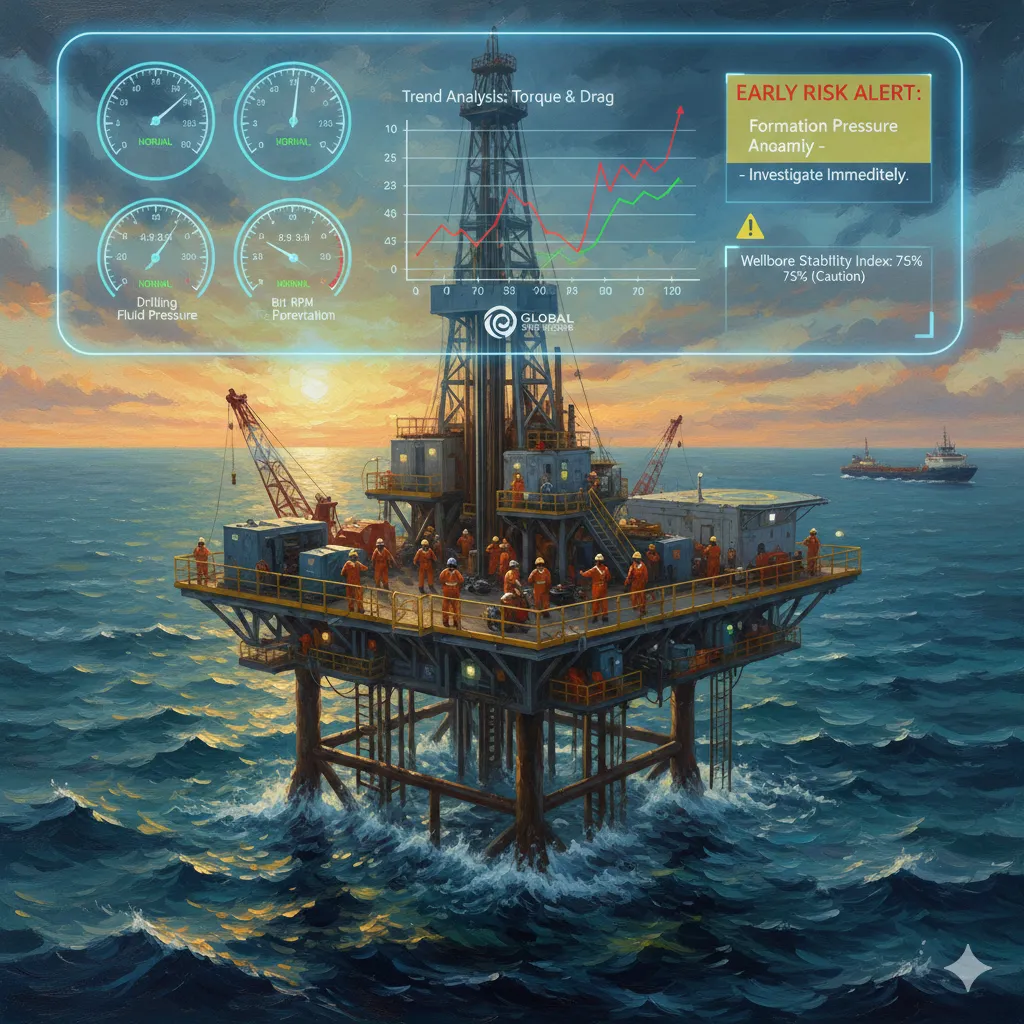
Drilling NPT prevention agent monitoring real-time operations

Drilling NPT Prevention Agent

Drilling NPT Prevention Agent: Stop Losing Days to Surprises ⏱ 10 min read | πŸ€– AI & Automation | 🎯 For Decision Makers & Leaders Introduction: Drilling NPT Prevention Agent Drilling NPT Prevention Agent (NPT) remains one of the most persistent and expensive challenges in drilling operations. Despite experienced crews, advanced rigs and standardized reporting, unexpected events still cost operators days of lost time per well. At Logassa Inc, we design Drilling NPT Prevention Agent that continuously monitor real-time drilling signals, analyze Daily Drilling Reports (DDRs), retrieve lessons from offset wells and generate action-ready, evidence-backed alerts-while ensuring all operational decisions remain fully human. The Problem: Why Drilling Teams Still Lose Time Drilling NPT Prevention Agent (NPT) refers to any time spent on drilling activities that do not advance the well. Common causes include: – Equipment dysfunction – Wellbore instability (e.g., stuck pipe) – Waiting on decisions – Operational rework Most rigs already capture NPT categories using IADC DDR Codes and real-time data is streamed through standards such as WITSML.Yet incidents still escalate. Why NPT Happens – Even With Experienced Teams: Drilling NPT Prevention Agent NPT is rarely caused by negligence. It emerges from human limits under complex conditions: – High-volume real-time signals are easy to miss during busy shifts – Context is fragmented across sensors, DDR narratives and historical wells – Shift handovers lose the β€œstory” behind subtle trend changes – Teams react after thresholds are crossed instead of earlier trend shifts πŸ’‘Bottom line: The rig already produces enough data to prevent many issues. The challenge is converting that data into fast, consistent, evidence-based decisions. What β€œEarly Warning” Actually Means in Drilling: Drilling NPT Prevention Agent True early warning is not another alarm. It means: – Detecting trend deviations, not just threshold breaches – Explaining β€œwhy this matters now” in plain language – Attaching verifiable evidence (signals, time windows, notes) – Suggesting mitigations aligned to approved practices If there is no evidence, there should be no alert. The Manual Reality Today (and Why It’s Costly) Most Drilling NPT Prevention Agent teams rely on dashboards, shift calls and expert judgment. This approach works but no scale. What Teams Do Manually? – Monitor multiple real-time dashboards – Write and interpret DDR narratives – Search offset wells for similar symptoms – Coordinate calls between rig, engineers and RTOC – Decide under pressure, document later Why this Consumes Time & Resources? – Constant context switching between tools – Tribal knowledge locked in experts or PDFs – Slow retrieval of similar cases during incidents – Inconsistent decisions across shifts – Weak feedback loops into future planning πŸ’‘Result:Late escalation, repeated issues across wells and growing coordination overhead-especially in remote monitoring environments. The Solution: Drilling NPT Prevention Agent A Drilling NPT Prevention Agent acts as an always-on co-pilot. It does not control equipment. It does not replace engineers. It supports faster, more consistent decision-making. How Agentic AI + GenAI Solve the Problem Detect Identifies early risk patterns from trends-not just alarms-and assigns severity and confidence. Evidence Attaches exact data windows, charts and DDR excerpts. No evidence β†’ no claim. Retrieve Uses Retrieval-Augmented Generation (RAG) to pull learnings from offset wells, SOPs and approved runbooks. Explain Summarizes why this matters now in clear, operational language. The engineer stays in control. Suggest Proposes mitigations aligned to site-approved practices. Escalate Routes alerts to the right roles and logs outcomes to strengthen future recommendations. Full audit trail included. What Makes This β€œAgentic” (Not a Chatbot) The agent executes a multi-step workflow: Β  Detect β†’ Retrieve β†’ Explain β†’ Suggest β†’ Escalate β†’ Log This is orchestration across systems-not conversational guessing. Real-World Deployment Flow Ingest live Drilling NPT Prevention Agent parameters, DDR notes and offset well documents Detect early risk patterns and assign confidence Retrieve similar cases and proven mitigations Generate evidence-backed alerts with β€œwhy now” Β  Human review β†’ decision β†’ outcome logged What a High-Quality Alert Includes? Risk type: e.g., developing stuck pipe Evidence: torque trend, pressure change, ROP drop Context: hole section, BHA, mud properties Suggested actions: aligned to approved runbooks Escalation: Drilling NPT Prevention Agent engineer, superintendent if risk increases Reference Architecture (High Level) Data & Integration Layer – WITSML ingestion and normalization – Time-series stores (rig sensors, mud logging, MWD/LWD) – Document repositories (DDRs, post-well reports) – Well master data (rig, section, BHA metadata) AI & Orchestration Layer – Anomaly detection and risk classification – RAG grounded in approved documents – Agent orchestration with guardrails – Confidence scoring, explainability, audit logs Pilot Scorecard: How Success Is Measured Operational Metrics – Time-to-detect – Time-to-decision – Engineer-validated NPT hours avoided – Reduction in repeated issues Quality Metrics – Engineer usefulness rating per alert – % alerts with evidence and explanation – False alarm rate – Recall on known precursor patterns Safety & Governance Guardrails (Non-Negotiable) Human-in-the-loop approvals Role-based access control (RBAC) β€œNo evidence β†’ no claim” policy End-to-end audit logging Why Does This Improves Safety? Earlier awareness reduces emergency conditions Consistency across shifts improves handovers Evidence-backed alerts reduce decision pressure Stronger learning loops improve future wells Final Thought: Drilling NPT Prevention Agent Drilling NPT Prevention Agent are not about automating drilling decisions.They are about supporting the people who make them-earlier, more consistently and with better evidence. At Logassa Inc, we build agentic AI systems that respect operational authority while delivering measurable reductions in downtime, risk and uncertainty. Β  πŸ‘‰ The best time to start was yesterday. The second-best time is today-with Logassa Inc and our advanced AI solutions. Know more about our works with our Blogs. Happy Reading!

Drilling NPT Prevention Agent Read More Β»

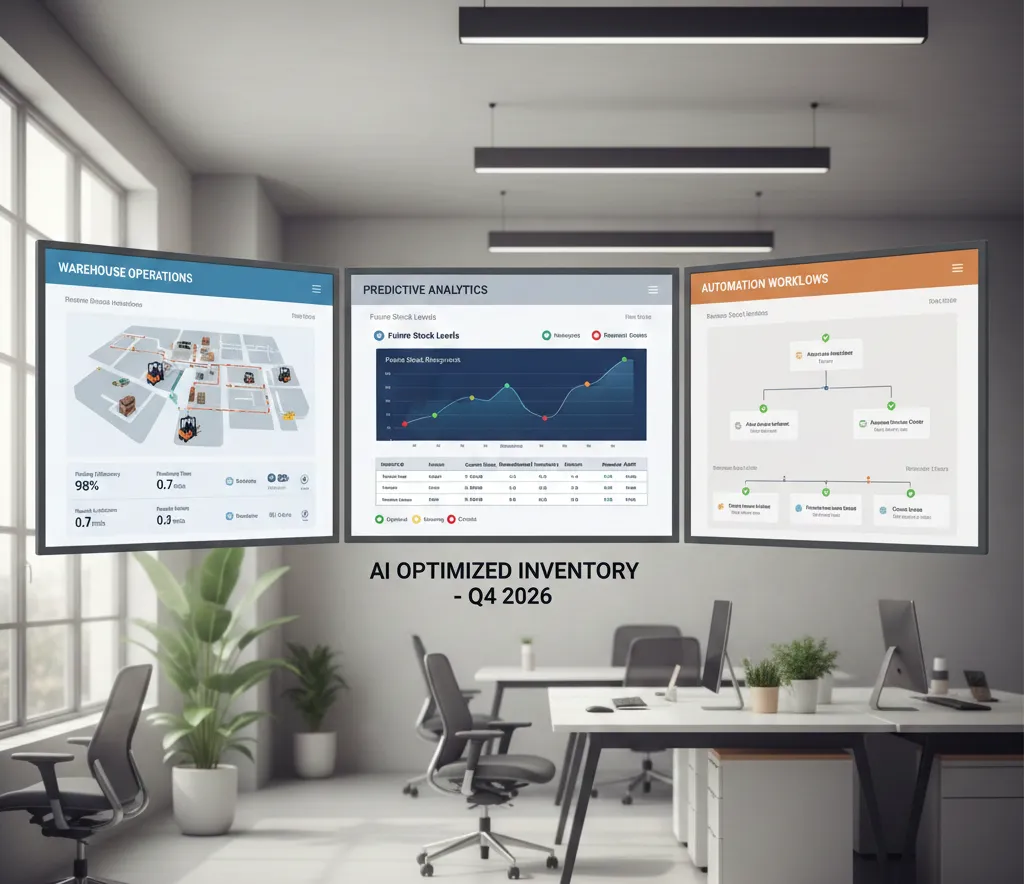
AI-driven inventory management system dashboard

AI-Driven Inventory Management System

AI-Driven Inventory Management System Using n8n Automation ⏱ 10 min read | πŸ€– AI & Automation | 🎯 For Decision Makers & Leaders Inventory Is No Longer a Storage Problem: AI-Driven Inventory Management System For modern enterprises, the AI-Driven Inventory Management System has evolved far beyond tracking stock levels. Today, it is about anticipating demand, optimizing capital and making intelligent decisions before disruptions occur. Β  However, many organizations still: – React too late to demand shifts, chasing outdated trends – Rely on manual forecasting methods that lack predictive accuracy – Use ERP systems that report historical data instead of future insights As a result, inventory becomes a liability instead of a strategic asset. The Critical Gap in Traditional Inventory & ERP Systems: AI-Driven Inventory Management System Even advanced ERP platforms are fundamentally descriptive, not predictive. They provide visibility into current inventory but fail to answer what truly matters: what’s coming next. Β  This limitation leads to: – Excess capital tied up in overstock, restricting cash flow – Emergency procurement cycles, eroding margins – Lost revenue opportunities due to stockouts and delays To compete at scale, businesses need inventory systems that think ahead. Our Solution: An AI-Driven Inventory Management System At Logassa Inc, we designed an AI-Driven Inventory Management System that converts inventory data into real-time predictive intelligence. By orchestrating workflows through n8n automation and applying OpenAI-powered forecasting models, the system continuously analyzes trends, predicts demand and automates inventory decisions-while keeping ERP systems synchronized in real time. Why We Use n8n: Intelligent Orchestration at Enterprise Scale n8n is the backbone of our automation layer because it enables: – Seamless integration with ERPs, databases, APIs and data warehouses – Custom logic design without hard vendor dependencies – Enterprise-grade scalability without operational bottlenecks This architecture ensures flexibility, transparency and long-term scalability. 1. Continuous Data Ingestion Inventory levels, historical sales data and demand signals are collected automatically across systems. 2. AI-Powered Demand Forecasting OpenAI analyzes sales velocity, seasonality and trend patterns to generate forward-looking demand insights. 3. Decision Intelligence Layer n8n logic evaluates reorder points, overstock risks and optimal procurement quantities. 4. Automated Execution The system updates ERP records, generates purchase orders and sends alerts-all in real time. This ensures decisions are made before issues arise, not after they impact operations. Measurable Business Impact: AI-Driven Inventory Management System Organizations deploying this AI-driven inventory management system achieve: – Reduced stockouts and backorders – Optimized inventory holding costs – Faster, data-driven decisions – Improved cash flow visibility – Elimination of manual errors – Predictive planning capability – Audit-ready decision logs – Scalability without increasing headcount Industries We Support: AI-Driven Inventory Management System This solution is designed for complex, regulated and high-volume environments, including: Retail & E-commerce Manufacturing & Healthcare Logistics & Supply Chain FMCG Wholesale & Distribution Pharmaceuticals & Medical Supply The system adapts to SKU complexity, lead times, compliance rules and demand volatility. Deployment options include cloud or self-hosted, with no vendor lock-in. Live Demo: AI-Generated Purchase Order in Production – AI-Driven Inventory Management System The image below represents an AI-Driven Inventory Management System output, not a mock-up. The AI-driven workflow: – Identified a future stockout – Forecasted upcoming demand – Calculated reorder quantities – Automatically generated a purchase order – Sent notification emails without human intervention This is production-ready decision automation. Final Takeaway: AI-Driven Inventory Management System Inventory excellence today requires predictive intelligence, not reactive reporting. With an AI-Driven Inventory Management System, enterprises transform inventory from an operational burden into a competitive advantage. At Logassa Inc, we help organizations achieve this through AI-powered automation built for scale, compliance and long-term growth. πŸ‘‰ The best time to start was yesterday. The second-best time is today-with Logassa Inc and our advanced AI solutions. Know more about our works with our Blogs. Happy Reading!

AI-Driven Inventory Management System Read More Β»

AI agents streamlining Permit to Work and Job Safety Analysis workflows

Smart Permits: Agents for Work Permit

Smart Permits: How AI Agents for Work Permit Streamline & Analyse Job Safety ⏱ 9 min read | πŸ€– Agentic AI | 🎯 For Decision Makers The Challenge: Safety Systems Struggling to Keep Pace Agents for Work Permit (PTW) and Job Safety Analysis (JSA) are now a foundational safety control. However, modern industrial operations now involve more contractors, more simultaneous activities and tighter execution windows than traditional permit workflows were designed to handle. High-stakes environments In industries such as oil & gas, chemicals, power and manufacturing, a small planning gap can escalate into a serious incident. Therefore, agents for work permit systems must ensure traceability, consistency and accountability at every step. SIMOPS complexity Simultaneous Operations (SIMOPS) introduce overlapping risks across units, locations and scopes for agents for work Permit. Manually identifying spatial and temporal conflicts across dozens of permits quickly becomes a cognitive overload. Workforce pressure Night shifts, contractor turnover and schedule pressure increase the likelihood of rushed permits and inconsistent JSAs-even among experienced supervisors. Why Traditional PTW & JSA Processes Fall Short: Agents for Work Permit Most safety failures are not caused by negligence. Instead, they stem from human limits, fragmented systems and workflows that do not scale with operational reality. Operational friction Permit cycles often become slow, form-heavy and repetitive. Under pressure, teams may unintentionally trade depth of hazard analysis for speed. Inconsistent hazard identification Two supervisors performing identical work on these agents for work permit produce very different JSAs. Meanwhile, copy-paste templates frequently miss site-specific hazards. Conflict checking doesn’t scale Manually validating conflicts across multiple permits, locations and time windows is extremely difficult to do reliably and quickly. Weak learning loops Near-misses and incident learnings often remain locked in PDFs or databases, rarely feeding back into everyday permit quality. Where AI Fits-and Where It Does Not AI agents for work permit in PTW and JSA systems should reduce friction and improve consistency, while keeping authority, accountability and approvals firmly human. What an AI agent can do? βœ… – Draft PTWs and JSAs from plain-language job descriptions – Retrieve relevant SOPs, standards and learnings using RAG – Flag missing fields, prerequisites and overlooked hazards – Detect SIMOPS conflicts and escalation conditions – Route approvals and maintain a complete audit trail What an AI agent must never do? ❌ – Autonomously approve permits or bypass sign-offs – Act as a black box without sources or traceability – Recommend controls without citing approved procedures – Trigger equipment actions without explicit human governance In short: AI assists; humans decide. How a PTW/JSA AI Agents for Work Permit is Executed in the Real World Serious deployments follow a predictable, auditable architecture: retrieve approved knowledge, validate prerequisites and route approvals-with every step logged. Draft The worker describes the task in natural language. The agent extracts key entities such as equipment, location and work type, then pre-fills PTW and JSA drafts using site-approved templates for our agents for work Permit. Retrieve & Cite Using Retrieval-Augmented Generation (RAG), the agent pulls relevant SOPs, isolation procedures and historical learnings that match the exact context. Every recommendation is source-backed. Validate & Route The agent checks prerequisites through integrated systems such as training records, gas test logs and CMMS. It then routes the permit through defined approval workflows while maintaining a full audit trail. What Makes This β€œAgentic”-Not Just a Chatbot This is not conversational automation. It is orchestration. The agent executes a multi-step workflow across systems: Draft β†’ Retrieve β†’ Validate β†’ Conflict-check β†’ Route β†’ Log Each step is deliberate, traceable and governed. Typical integrations – PTW systems for permit authoring and approvals – CMMS platforms (SAP, IBM Maximo) for asset and work order context – Training and competency systems for authorization checks – Gas testing and fire-watch logs – Document management systems for SOPs and standards Implementation Roadmap: From Trust to Scale – Agents for Work Permit Successful rollouts prioritize trust and auditability first, then expand capability. 1) Assess (2–4 weeks) Map current PTW/JSA workflows, identify bottlenecks and inventory data sources and integrations. 2) Pilot (8–12 weeks) Start with one site or permit type. Run the agent in shadow mode before enabling assistive drafting. Measure: – Cycle time – Rework frequency – Hazard completeness – User adoption 3) Govern Enforce role-based access, citations, approval gates and audit logs. If the agent cannot find an approved source, it does not answer. 4) Scale Expand facility by facility using a risk-based approach. Add advanced validation and conflict detection as confidence grows. Limitations to Acknowledge: Agents for Work Permit Credible safety systems earn trust by being explicit about limitations. Data quality is critical Outdated SOPs or incomplete incident data will degrade outputs. Strong governance is essential. Over-trust is a risk Interfaces must encourage review and verification-never blind acceptance. Integration takes planning Legacy systems vary widely. Start small, then scale deliberately. Final Thought: Agents for Work Permit PTW and JSA AI agents for work permit are not about automating safety decisions. They are about supporting the people who make them-improving consistency, reducing friction and making safety planning easier to audit at scale. When designed correctly, AI does not weaken safety culture. It reinforces it. πŸ‘‰ The best time to start was yesterday. The second-best time is today-with Logassa Inc and our advanced AI solutions. Know more about our works with our Blogs. Happy Reading! πŸ–‡οΈ Sources Referred: Agents for Work Permit – OSHA JSA Guide β†— – API RP 54 (PDF) β†— – CCPS Safe Agents for Work Permit Practices β†— – CCPS Agents for Work Permit Guidance β†— – OSHA Permit-Required Confined Spaces β†— – OSHA Permit Process(1926) β†— – Shell ePTW Case β†— – SPE Paper: Smart e-PTW β†— – SPE JPT: e-PTW Guide β†— – CCPS SWP β†—

Smart Permits: Agents for Work Permit Read More Β»

AI agents for workplace safety in modern industrial operations

AI Agents for Workplace Safety Guide

AI Agents for Workplace Safety: The Next Evolution ⏱ 12 min read | πŸ€– AI & Automation | 🎯 For Decision Makers Introduction to AI Agents for Workplace Safety AI agents for workplace safety is undergoing a rapid transformation. Over the years, organizations moved from paper-based permits to digital safety platforms. Now, AI agents for workplace safety are driving the next major shift. Today, intelligent AI agents can draft permits, validate Job Safety Analyses (JSAs), suggest hazard controls, and cross-check safety steps in real time. However, humans remain firmly in control. AI agents support decision-making instead of replacing it. As a result, industries such as oil & gas, construction, manufacturing, utilities, and maritime operations are already seeing measurable gains. Moreover, organizations using AI agents for workplace safety report faster approvals, fewer errors, and stronger compliance outcomes. The Three Eras of Safety Management To understand why AI agents for workplace safety matter today, it helps to review how safety systems evolved. PAST Paper-Based Safety PRESENT Digital Platforms FUTURE AI Agents & Predictive Systems 2000s 2020s 2030s Era 1: Paper-Based Safety Systems Initially, workplace safety relied entirely on manual processes. Consequently, organizations struggled with inefficiency and risk. – Handwritten permits and approvals – Slow workflows and frequent document loss – Limited visibility into active risks As a result, safety teams spent more time managing paperwork than managing hazards. Era 2: Digital Safety Platforms Next, digital systems replaced paper forms. While this improved efficiency, intelligence was still limited. – Electronic permits and cloud storage – Automated routing and dashboards – Faster approvals, but manual risk analysis Although helpful, these platforms still depended heavily on human input. Era 3: AI Agents for Workplace Safety Today, AI agents for workplace safety introduce intelligence into every step of safety planning. – AI drafts PTWs and JSAs – AI suggests hazard controls – AI validates completeness and predicts risk – Humans approve all decisions As a result, safety workflows become faster, more consistent and easier to audit. πŸ”‘ Key Insight: AI Agents Support-They Don’t Replace Humans A common misconception is that AI agents for workplace safety automate decisions. In reality, they function as expert assistants. AI agents can: – Draft permits using SOPs and historical data – Suggest controls from approved knowledge bases – Flag gaps, conflicts and inconsistencies However, human supervisors always make the final call. Think of AI agents as 24/7 safety advisors that strengthen human judgment. Why AI Agents for Workplace Safety Are Emerging Now? This shift is happening because three critical technologies have converged. – Large Language Models (LLMs): LLMs understand safety procedures, regulations and incident reports written in natural language. Therefore, they can interpret real-world work descriptions accurately. Β  – Retrieval-Augmented Generation (RAG): RAG ensures AI agents use only approved internal documents such as SOPs, JSAs and safety manuals. As a result, outputs remain compliant and trustworthy. Β  – Platform Integration: Modern APIs now connect PTW systems with: – ERP platforms – Incident databases – IoT sensors – Training and certification records Together, these technologies power reliable AI agents for workplace safety. What AI Agents for Workplace Safety Do Today? 1. Intelligent Permit Drafting Instead of starting from blank forms, workers describe tasks in plain language. β€œHot work on pipeline valve V-237 in Unit 4, Tuesday 0800-1200.” The AI agent then: – Selects the correct permit template – Pre-fills location, equipment and timing – Suggests PPE based on task type – Pulls relevant JSAs – Identifies required approvers 🌎 Real-World Impact: One oil & gas operator reduced permit creation time from 45 minutes to 15 minutes. Meanwhile, permit completeness increased from 73% to 96%. 2. Hazard Prediction and Control Suggestions AI agents analyze historical incidents and near-misses. Consequently, they can: – Detect recurring risk patterns – Recommend controls from approved SOPs – Assign dynamic risk scores This enables proactive hazard mitigation instead of reactive responses. 3. Cross-System Safety Validation AI agents for workplace safety can validate data across systems within seconds. They automatically check: – Worker training certifications – Equipment lockout and isolation status – Weather alerts – Concurrent work conflicts 🎯 Human-AI Partnership: AI highlights risks, while humans decide how to proceed. 4. Natural Language Safety Queries Safety teams can ask questions such as: – β€œShow all hot work permits from Unit 3 last month.” – β€œWhat are the most common confined space hazards this year?” – β€œWhat PPE is required for working at height?” The AI responds using approved internal documents with clear source references. 5. Continuous Learning From Incidents When incidents occur, AI agents for workplace safety: – Analyze root-cause reports – Update hazard libraries – Suggest JSA improvements – Flag similar upcoming work Over time, safety quality continuously improves. πŸ“ˆ Measurable Outcomes of AI Agents for Workplace Safety: Organizations using AI agents report: – 3Γ— faster permit creation – 85% fewer incomplete permits – 67% improvement in hazard identification – 40% reduction in work delays – Near-zero audit non-compliance The Business Case for AI Agents for Workplace Safety Time has changed 30 minutes saved Γ— 50 permits per week = 125 hours recovered per month Quality Improvement Every permit consistently follows approved templates and SOPs. Risk Reduction Improved hazard identification reduces preventable incidents. Compliance Confidence Audit-ready documentation is maintained automatically. Beyond Cost Savings: Strategic Value AI agents for workplace safety also deliver long-term advantages: – Preserve expert knowledge – Ensure consistency across sites – Accelerate employee onboarding – Reveal systemic safety gaps – Strengthen competitive positioning πŸš€ Early Adopter Advantage: Organizations adopting AI agents in 2025 gain durable advantages as their systems learn faster and improve continuously. The Future of AI Agents for Workplace Safety (2025-2035) Near-Term Capabilities – Voice-activated permit creation – Computer vision hazard detection – IoT-driven permit updates – Multi-language safety workflows Unified Safety Ecosystems Future platforms will unify: – PTW and JSA systems – Incident management – Training programs – Contractor onboarding – Regulatory reporting The Human Element Remains Central Even in the future: – Humans approve permits – Workers stop unsafe jobs

AI Agents for Workplace Safety Guide Read More Β»