
Blogs

AI agents for workplace safety in modern industrial operations

AI Agents for Workplace Safety Guide

AI Agents for Workplace Safety: The Next Evolution ⏱ 12 min read | 🤖 AI & Automation | 🎯 For Decision Makers Introduction to AI Agents for Workplace Safety AI agents for workplace safety is undergoing a rapid transformation. Over the years, organizations moved from paper-based permits to digital safety platforms. Now, AI agents for workplace safety are driving the next major shift. Today, intelligent AI agents can draft permits, validate Job Safety Analyses (JSAs), suggest hazard controls, and cross-check safety steps in real time. However, humans remain firmly in control. AI agents support decision-making instead of replacing it. As a result, industries such as oil & gas, construction, manufacturing, utilities, and maritime operations are already seeing measurable gains. Moreover, organizations using AI agents for workplace safety report faster approvals, fewer errors, and stronger compliance outcomes. The Three Eras of Safety Management To understand why AI agents for workplace safety matter today, it helps to review how safety systems evolved. PAST Paper-Based Safety PRESENT Digital Platforms FUTURE AI Agents & Predictive Systems 2000s 2020s 2030s Era 1: Paper-Based Safety Systems Initially, workplace safety relied entirely on manual processes. Consequently, organizations struggled with inefficiency and risk. – Handwritten permits and approvals – Slow workflows and frequent document loss – Limited visibility into active risks As a result, safety teams spent more time managing paperwork than managing hazards. Era 2: Digital Safety Platforms Next, digital systems replaced paper forms. While this improved efficiency, intelligence was still limited. – Electronic permits and cloud storage – Automated routing and dashboards – Faster approvals, but manual risk analysis Although helpful, these platforms still depended heavily on human input. Era 3: AI Agents for Workplace Safety Today, AI agents for workplace safety introduce intelligence into every step of safety planning. – AI drafts PTWs and JSAs – AI suggests hazard controls – AI validates completeness and predicts risk – Humans approve all decisions As a result, safety workflows become faster, more consistent and easier to audit. 🔑 Key Insight: AI Agents Support-They Don’t Replace Humans A common misconception is that AI agents for workplace safety automate decisions. In reality, they function as expert assistants. AI agents can: – Draft permits using SOPs and historical data – Suggest controls from approved knowledge bases – Flag gaps, conflicts and inconsistencies However, human supervisors always make the final call. Think of AI agents as 24/7 safety advisors that strengthen human judgment. Why AI Agents for Workplace Safety Are Emerging Now? This shift is happening because three critical technologies have converged. – Large Language Models (LLMs): LLMs understand safety procedures, regulations and incident reports written in natural language. Therefore, they can interpret real-world work descriptions accurately.   – Retrieval-Augmented Generation (RAG): RAG ensures AI agents use only approved internal documents such as SOPs, JSAs and safety manuals. As a result, outputs remain compliant and trustworthy.   – Platform Integration: Modern APIs now connect PTW systems with: – ERP platforms – Incident databases – IoT sensors – Training and certification records Together, these technologies power reliable AI agents for workplace safety. What AI Agents for Workplace Safety Do Today? 1. Intelligent Permit Drafting Instead of starting from blank forms, workers describe tasks in plain language. “Hot work on pipeline valve V-237 in Unit 4, Tuesday 0800-1200.” The AI agent then: – Selects the correct permit template – Pre-fills location, equipment and timing – Suggests PPE based on task type – Pulls relevant JSAs – Identifies required approvers 🌎 Real-World Impact: One oil & gas operator reduced permit creation time from 45 minutes to 15 minutes. Meanwhile, permit completeness increased from 73% to 96%. 2. Hazard Prediction and Control Suggestions AI agents analyze historical incidents and near-misses. Consequently, they can: – Detect recurring risk patterns – Recommend controls from approved SOPs – Assign dynamic risk scores This enables proactive hazard mitigation instead of reactive responses. 3. Cross-System Safety Validation AI agents for workplace safety can validate data across systems within seconds. They automatically check: – Worker training certifications – Equipment lockout and isolation status – Weather alerts – Concurrent work conflicts 🎯 Human-AI Partnership: AI highlights risks, while humans decide how to proceed. 4. Natural Language Safety Queries Safety teams can ask questions such as: – “Show all hot work permits from Unit 3 last month.” – “What are the most common confined space hazards this year?” – “What PPE is required for working at height?” The AI responds using approved internal documents with clear source references. 5. Continuous Learning From Incidents When incidents occur, AI agents for workplace safety: – Analyze root-cause reports – Update hazard libraries – Suggest JSA improvements – Flag similar upcoming work Over time, safety quality continuously improves. 📈 Measurable Outcomes of AI Agents for Workplace Safety: Organizations using AI agents report: – 3× faster permit creation – 85% fewer incomplete permits – 67% improvement in hazard identification – 40% reduction in work delays – Near-zero audit non-compliance The Business Case for AI Agents for Workplace Safety Time has changed 30 minutes saved × 50 permits per week = 125 hours recovered per month Quality Improvement Every permit consistently follows approved templates and SOPs. Risk Reduction Improved hazard identification reduces preventable incidents. Compliance Confidence Audit-ready documentation is maintained automatically. Beyond Cost Savings: Strategic Value AI agents for workplace safety also deliver long-term advantages: – Preserve expert knowledge – Ensure consistency across sites – Accelerate employee onboarding – Reveal systemic safety gaps – Strengthen competitive positioning 🚀 Early Adopter Advantage: Organizations adopting AI agents in 2025 gain durable advantages as their systems learn faster and improve continuously. The Future of AI Agents for Workplace Safety (2025-2035) Near-Term Capabilities – Voice-activated permit creation – Computer vision hazard detection – IoT-driven permit updates – Multi-language safety workflows Unified Safety Ecosystems Future platforms will unify: – PTW and JSA systems – Incident management – Training programs – Contractor onboarding – Regulatory reporting The Human Element Remains Central Even in the future: – Humans approve permits – Workers stop unsafe jobs

AI Agents for Workplace Safety Guide Read More »
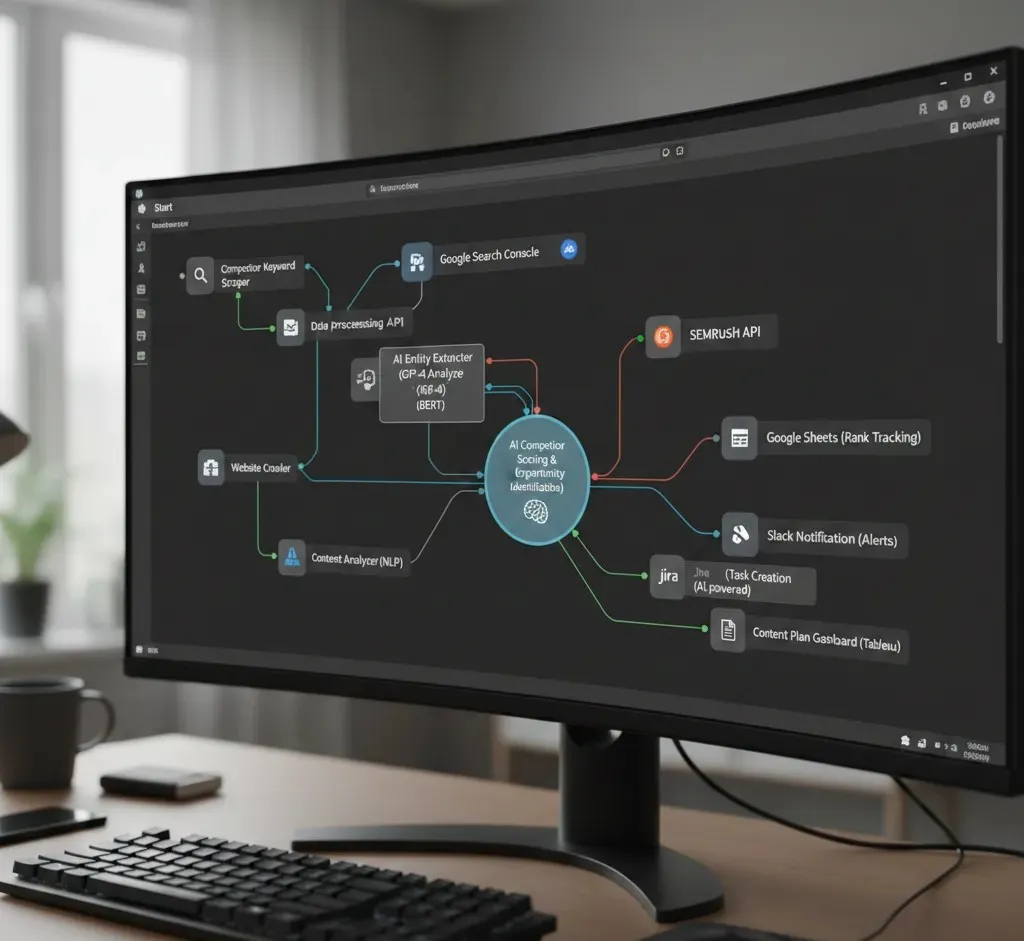
AI-driven SEO automation workflow using n8n for competitor analysis

AI-Driven SEO Automation for Research

AI-Driven SEO Research Automation: Building an Intelligent n8n Flow for Research ⏱ 10–12 min read | 🤖 AI Automation | 📊 SEO Intelligence Introduction: The Shift from Manual to AI-driven SEO automation Modern businesses are rapidly moving away from manual keyword research and time-intensive competitor audits and so is the need for AI-driven SEO automation. Traditional SEO workflows-spread across spreadsheets, browser tabs and disconnected tools-are no longer fast or scalable enough to compete in real-time search environments. As a result, AI-driven SEO automation is becoming the new standard. By combining live SERP intelligence, large language models (LLMs) and workflow orchestration organizations can uncover competitive opportunities faster and with far greater accuracy. In this article, we break down how Logassa’s AI-driven SEO automation system, built on n8n, delivers real-time competitor intelligence-starting with nothing more than a single domain input. System Overview: AI-Driven SEO Automation Intelligence Engine The Automated SEO Competitor Analysis System is a multi-agent, AI-orchestrated workflow designed to eliminate manual SEO groundwork through intelligent automation and live data processing. Instead of relying on static keyword tools or manual audits, the system operates as an autonomous SEO research engine, dynamically performing the following core functions: – Generates high-intent, niche-specific keywords aligned with a website’s services and real search demand – Identifies true organic SEO competitors using live SERP data while filtering out news, directories and informational sources – Automatically logs validated keywords and competitor insights into a structured Google Sheets database for immediate access by marketing and growth teams Consequently, SEO research cycles shrink from hours to minutes-without sacrificing accuracy or relevance. Core Architecture and Workflow Design: AI-driven SEO automation Workflow Initiation The workflow is triggered through an external webhook, allowing seamless integration with CRMs, lead capture forms, internal dashboards or other automation platforms. To initiate analysis, users provide only two inputs: – Target domain domain(for example, example.com) – Target country, which is automatically translated into a localized Google search parameter This ensures that all SERP analysis reflects geographic search intent, not generic global results. AI Agents and Intelligent Tooling At the heart of the system is a carefully orchestrated combination of LLMs and live search data, coordinated through n8n workflow nodes. Key Components – LLM Agents (GPT-4.1-mini / GPT-4o-mini) Perform advanced reasoning, contextual analysis and decision-making to determine optimal keyword and competitor discovery strategies – SerpAPI Integration Retrieves real-time, location-specific SERP data to validate keywords and identify true organic competitors – Memory Nodes Maintain session context, prevent redundant queries and ensure analytical consistency across workflow executions Together, these components form a scalable, AI-driven SEO automation framework that replaces manual research with continuously validated intelligence. Keyword Generation and Validation Pipeline for AI-driven SEO automation Step 1: Domain Context Analysis The workflow begins with a SERP Scraper Agent (MCP) that performs exploratory searches related to the target domain. This step establishes contextual understanding of: – Industry focus – Service offerings – Market positioning This contextual grounding is critical for accurate, intent-driven keyword discovery. Step 2: Intelligent Keyword Discovery Using LLM reasoning, the system generates high-intent, service-aligned keywords that reflect real search behavior rather than generic suggestions. For example, a digital marketing agency domain may surface keywords such as: – SEO automation services – Google Ads optimization – Content marketing workflows Each keyword is generated with commercial relevance in mind-not just volume. Step 3: Keyword Validation and Optimization All generated keywords are validated against live SERP data via SerpAPI to confirm relevance and competitiveness. A dedicated processing node then: – Removes duplicate or explanatory text – Normalizes keyword formatting – Converts output into a clean, numbered structure – Reattaches the source domain for consistent tracking The finalized dataset is automatically stored in the “Keywords” tab of a centralized Google Sheets repository, making it instantly usable for SEO planning and campaign execution. Competitor Identification and Data Logging: AI-driven SEO automation Step 1: SERP-Based Competitor Discovery For each validated keyword, the system performs a real-time SERP scan to identify approximately 10 top-ranking organic competitors. To maintain relevance: – News websites – Blogs – Informational portals – Non-commercial domains are automatically filtered out, leaving only actionable business competitors. Step 2: Structured Data Extraction Each competitor entry is normalized using structured output parsers and includes: – Organic ranking position – Page title – URL – Meta description This ensures consistency, readability and immediate usability across SEO and marketing workflows. Step 3: Automated Data Logging All competitor data is automatically written to the “SEO Competitor Websites” tab within the centralized Google Sheets database. A final webhook response confirms successful execution, providing full visibility and traceability across automated SEO operations. OUTPUT SCREEN Why It Matters: Shift To AI-driven SEO automation Traditional SEO competitor audits often require multiple tools, hours of manual filtering and repeated validation. In contrast, Logassa’s AI-driven SEO automation workflow compresses this entire process into a fully autonomous pipeline. Key Advantages – Automation-First SEO – Eliminates repetitive research and manual competitor analysis – AI-Powered Accuracy – LLM agents understand semantic intent, not just keywords – Enterprise-Scale Ready – Ideal for agencies and organizations managing multiple domains or markets – Continuous Optimization – Easily scheduled or chained with other n8n or Zapier workflows As a result, teams move faster, make better decisions and focus on execution rather than research overhead. Conclusion: AI-driven SEO automation AI-powered SEO automation represents a fundamental shift in how organizations approach digital growth. By converting keyword research, SERP validation and competitor mapping into a fully autonomous workflow, businesses replace hours of manual effort with accurate, real-time search intelligence. Powered by LLM-driven reasoning, n8n workflow orchestration and live SERP data, Logassa’s Automated SEO Competitor Analysis System enables: – Faster optimization cycles – Smarter strategic decisions – Scalable, repeatable SEO operations This allows teams to focus less on research-and more on performance, execution and measurable growth. Partner With Logassa At Logassa LLC, we help businesses unlock the full potential of AI-driven automation for SEO, marketing intelligence and operational efficiency. From intelligent workflow design and custom LLM integrations to enterprise-grade n8n deployments, we transform manual research

AI-Driven SEO Automation for Research Read More »

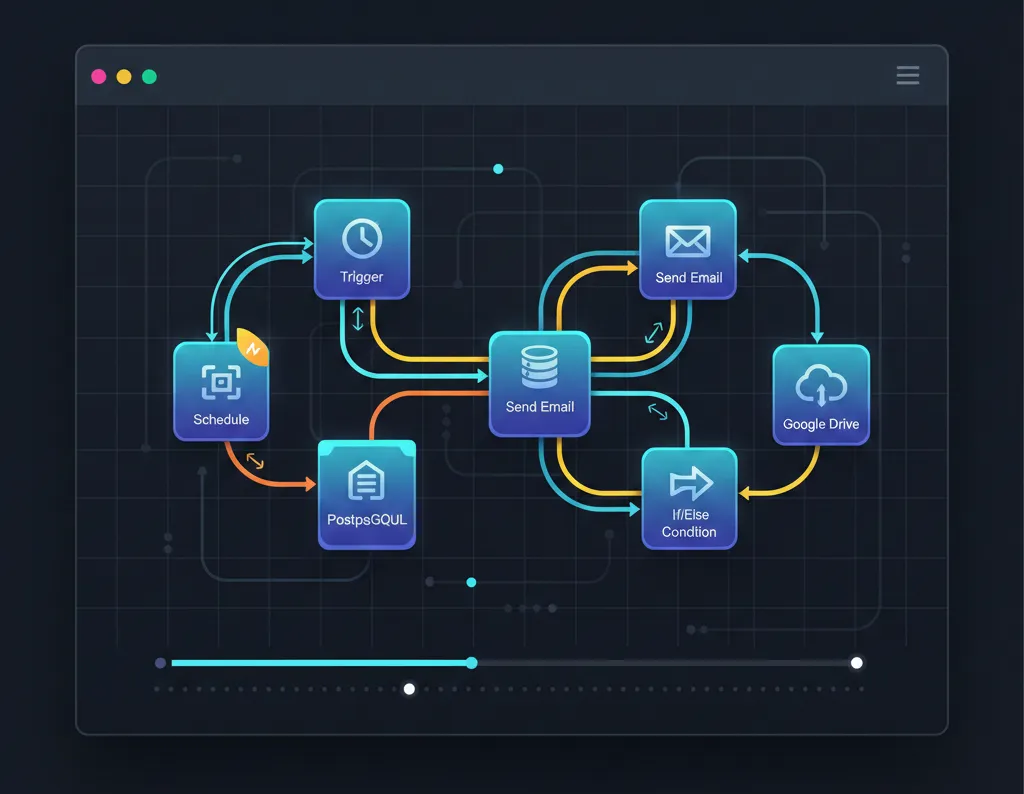
n8n automation platform powering modern business workflows

n8n Automation Platform for Business

n8n Automation Platform: Powering Modern Business Automation ⏱ 11 min read | ⚙️ Workflow Automation | 🎯 For Business & Tech Leaders Introduction to the n8n Automation Platform n8n Automation Platform is a need as in today’s fast-moving digital economy, organizations face constant pressure to deliver more with fewer resources. As a result, manual workflows drain productivity, repetitive tasks slow teams down and scaling operations often means increasing headcount. This is where automation becomes essential. Among the growing ecosystem of workflow automation tools, the n8n automation platform has quickly emerged as a preferred solution for modern businesses. Unlike many proprietary tools with high licensing costs and rigid limits, n8n delivers open-source flexibility, cost efficiency and unlimited workflow creation. Therefore, startups, mid-sized companies and large enterprises alike are adopting the n8n automation platform to streamline operations, reduce costs and scale intelligently. What Is the n8n Automation Platform? The n8n automation platform (pronounced n-eight-n) is an open-source workflow automation tool designed to connect applications, APIs and services without complex coding.   Through an intuitive visual, drag-and-drop interface, teams can build workflows that: – Send emails automatically – Update CRM records – Sync data between systems – Monitor events and trigger actions   At its core, the n8n automation platform acts as a 24/7 digital engine. Consequently, background processes run reliably while teams focus on strategic, high-impact work instead of repetitive operational tasks. n8n Automation Platform vs Zapier and Make When comparing automation tools, flexibility and control matter. The n8n automation platform stands apart in several critical areas. Feature n8n (Self-Hosted) Zapier Make Pricing Model Free (self-hosted) / Optional cloud Paid tiers Paid tiers Customization Fully customizable Limited Moderate Open Source Yes No No Automation Limits Unlimited (self-hosted) Plan-based Plan-based Data Control Full ownership Zapier servers Make servers As a result, organizations that value data ownership and flexibility often choose the n8n automation platform. Common Automation Use Cases with the n8n Automation Platform The n8n automation platform supports a wide range of operational and marketing workflows, including: – Lead Management Automation-Capture leads from websites or ads and sync them instantly with your CRM – Social Media Monitoring-Track brand mentions and receive real-time alerts – SEO Performance Tracking-Monitor keyword rankings and update dashboards automatically – E-commerce Automation-Trigger alerts for new orders, inventory changes, or abandoned carts Consequently, teams respond faster, reduce manual effort and maintain operational consistency. How the n8n Automation Platform Delivers Business Value By automating repetitive processes, the n8n automation platform enables organizations to operate more efficiently and intelligently.   Key Business Benefits: – Time Savings-Eliminate manual data entry and repetitive reporting – Improved Customer Experience-Enable faster responses through automated workflows – Better Data Management-Centralize and synchronize data for analytics and decision-making Therefore, automation becomes a growth enabler rather than just a cost-saving tool. Why Businesses Choose the n8n Automation Platform Organizations across industries adopt the n8n automation platform for several compelling reasons: – Unlimited Automations-No per-task or execution limits when self-hosted – Cost Efficiency-Reduce reliance on expensive SaaS automation subscriptions – High Flexibility-Integrates with 400+ services and custom APIs – Enterprise Scalability-Supports startups, growing teams and large enterprises As a result, n8n scales alongside the business without limiting control or innovation. Getting Started with the n8n Automation Platform Step 1: Choose Your Deployment Model The n8n automation platform supports multiple deployment options: – Cloud Deployment-Sign up directly on the n8n cloud – Self-Hosted Deployment (Recommended)-Deploy using Docker, npm, or source code for full data ownership   Example Docker command: docker run -d –name n8n -p 5678:5678 -v ~/.n8n:/home/node/.n8n n8nio/n8n Once deployed, access the interface and complete the initial setup. Step 2: Create Your First Workflow After setup: – Navigate to the dashboard – Click Create Workflow – Add trigger, action and transformation nodes Thus, automation begins with simple building blocks. Step 3: Build an AI-Powered Automation (Example) A basic AI-driven workflow on the n8n automation platform may include: – Trigger Node: Activates on incoming messages – AI Agent Node: Acts as the reasoning layer – Google Gemini Chat Model: Generates responses – Memory Node: Maintains context – Calculator Tool: Handles numeric queries – SerpAPI Tool: Fetches real-time search data As a result, workflows move beyond rules into intelligent automation. Step 4: Configure Integrations Next, configure required APIs: – Google Gemini: Set API keys, temperature and token limits – SerpAPI: Define queries and output formats This ensures reliable and scalable automation. Step 5: Test and Deploy Before production: – Execute workflows to validate logic – Monitor logs and execution history – Refine and deploy Therefore, reliability and performance remain consistent. Community, Resources and Best Practices Community Support The n8n automation platform benefits from a strong global community: – Discord, GitHub and official forums – Shared workflows and real-world use cases Learning Resources – Step-by-step tutorials on the n8n blog – Video walkthroughs on YouTube – Official documentation at docs.n8n.io Best Practices for Scalable Automation – Use expressions for dynamic data handling – Monitor execution logs regularly – Scale using worker queues – Start with pre-built templates Conclusion The n8n automation platform is more than a workflow tool—it is a strategic enabler for modern business growth. By combining open-source flexibility, enterprise-grade scalability and cost efficiency, n8n empowers organizations to automate smarter, innovate faster and improve outcomes. Whether automating a single process or redesigning entire operations, the n8n automation platform scales without sacrificing control. Partner With Logassa At Logassa Inc, we help businesses unlock the full potential of the n8n automation platform through intelligent workflow design, custom integrations and secure self-hosted deployments. Whether you are a startup reducing operational overhead, an enterprise optimizing complex workflows, or a SaaS company scaling rapidly, Logassa delivers automation solutions built for efficiency, agility and long-term growth.   👉 The best time to start was yesterday. The second-best time is today-with Logassa Inc and our advanced AI solutions. Know more about our works with our Blogs. Happy Reading!

n8n Automation Platform for Business Read More »